


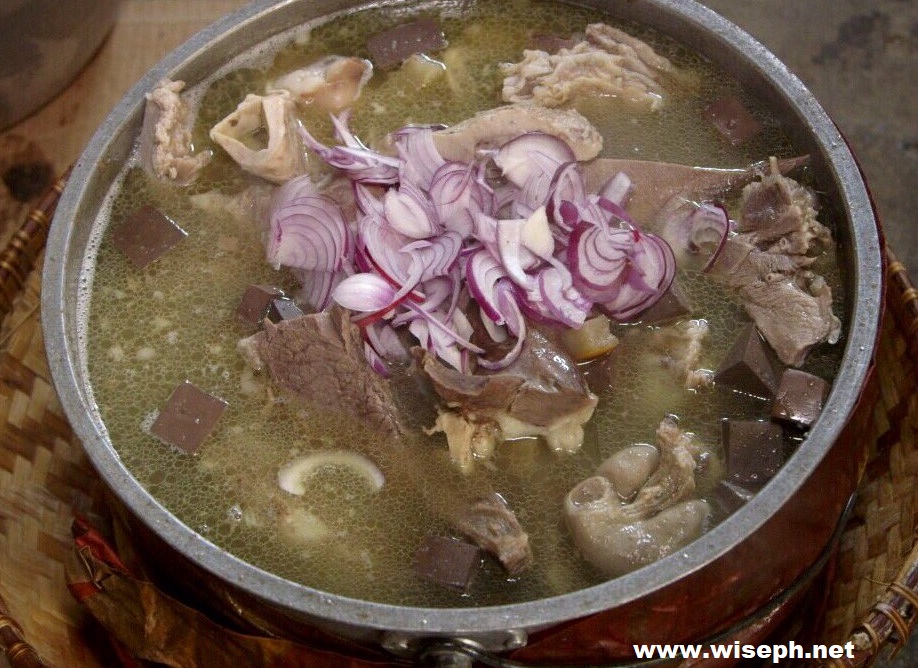
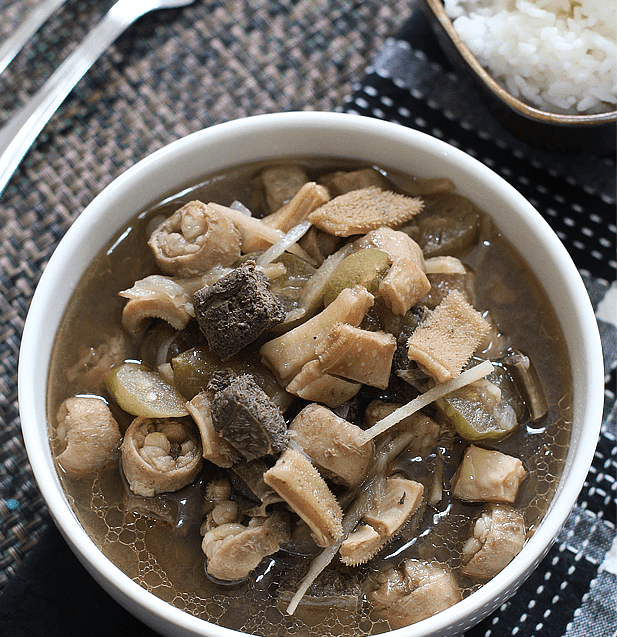
Sinanglaw is not beef soup. Not really.
It looks like soup. It comes in a bowl. But the first sip tells you something different is going on. The broth is sour and slightly bitter. The meat is a mix of textures — tripe that absorbed the broth for an hour, firm heart, liver that went in last and just barely cooked through. It hits in a way a regular nilaga never will.
This is market food. The kind you eat at 6 in the morning at a plastic table in the Ilocos palengke while vendors are still setting up around you. It is honest, loud in flavor, and completely uninterested in being pretty.
What I am sharing here is the real version, with the proper cleaning method, the correct order for adding innards, and the papait detail most recipes either skip or get wrong.
What is Ilocano sinanglaw?
Sinanglaw is a soured beef innards soup native to the Ilocos region of northern Philippines. It uses tripe, intestine, kidney, liver, and heart, simmered in a ginger-heavy broth and finished with a souring agent. It is always served hot with plain steamed white rice.
| Feature | Detail |
|---|---|
| Main protein | Beef tripe, intestine, kidney, liver, heart |
| Souring agent | Kamias, vinegar, kalamansi, or tamarind |
| Optional bitter element | Papait (grass-stomach juice) |
| Serving style | Hot with steamed white rice; souring agents served on the side |
| Region | Ilocos, northern Philippines |
The sourness and bitterness are not accidents. They are the whole point. Sinanglaw that tastes mild is not sinanglaw. It is just beef broth with some innards in it.
One thing worth knowing: in most Ilocano karinderyas, the souring agent comes on the side, not pre-mixed into the broth. Each person controls their own bowl. That is not lazy cooking. That is how the dish is meant to be eaten.
Sinanglaw vs. papaitan: same soul, different edge
Sinanglaw and papaitan share the same bones. Both use beef innards. Both have sour broth. The difference is the papait, the bitter element from bile or grass-stomach juice that defines papaitan.
Papaitan requires it. Sinanglaw does not. But across Ilocos, papait is almost always available on the side so the people at the table can dial in their own level of bitterness. Sinanglaw is papaitan with adjustable edge.
The same boldness-over-presentation mindset runs through Pampanga original sisig, where pig face and liver replace beef but the philosophy of using all parts and letting flavor lead is exactly the same.
What innards go into authentic sinanglaw
Authentic sinanglaw does not use a single cut of meat. It uses variety. The combination of textures, soft tripe, firm heart, silky liver, is what makes each spoonful different from the last.
Sourcing fresh innards from the wet market early in the morning makes a real difference here. Rising oil prices drive up market ingredient costs across the supply chain, and laman-loob prices move with them. Early palengke runs get you fresher cuts before the markup settles in.
How to clean tripe and intestine properly
Most people who make bad sinanglaw did not mess up the cooking. They rushed the cleaning.
Tripe and intestine carry odors that do not simmer out on their own. If you skip proper cleaning, that smell survives the entire cook and ends up in the broth. No amount of ginger fixes it.
Intestine cleaning method:
- Turn the intestine inside out, pushing it gradually with your fingers.
- Rinse under running water until it runs mostly clear.
- Rub firmly with rock salt and vinegar. Work it through with your hands.
- Rinse. Repeat the salt-vinegar rub two to three more times.
- Blanch in boiling water for 5 minutes. Discard the water and rinse.
- If it still has any smell, go back to step 3. No smell means it is clean.
Tripe cleaning method:
- Rinse under cold running water.
- Rub with coarse salt and calamansi or vinegar until the slippery film is gone.
- Blanch in boiling water, discard the water, rinse.
- Repeat the blanch once more. Ready when it no longer feels slick and has no off-smell.
The old palengke technique: boil first, clean again, then boil for real. That first blanch loosens residue that salt and vinegar alone cannot reach. After you discard that water, you are cooking clean meat in clean broth for the rest of the process.
The souring agents: kamias, vinegar, tamarind, and the papait option
There is no single correct souring agent for sinanglaw. Ilocanos use what is available and what they grew up with. In most karinderyas, it arrives on the side so each customer controls their own bowl.
| Souring agent | Flavor profile | How to use |
|---|---|---|
| Kamias | Sharp, clean, fruity sour | Add whole during simmering, remove before serving |
| White cane vinegar | Straightforward acid | Add near the end; adjust to taste |
| Kalamansi | Bright, citrusy | Squeeze fresh at the table |
| Tamarind | Deep, slightly sweet sour | Use as broth base (sampalok water) |
| Papait | Bitter, herbal, earthy | Squeeze from grass-stomach; add small amounts and taste as you go |
The papait is the most misunderstood part of this dish. This comes from the freshly eaten grass inside the cow’s stomach, squeezed for its juice. It adds a clean, herbal bitterness, not bile, not foul. That is what makes an authentic Ilocano bowl taste unlike any other beef soup in the country.
Some people hear “grass-stomach juice” and decide they are out. That is fine. Sinanglaw works without it. But the version that Ilocano grandmothers actually make, the one you eat standing up at a palengke at 6am, has the papait in it.
How to cook Ilocano sinanglaw (step by step)
Ingredients (serves 4 to 6):
- 500g beef tripe, cleaned
- 300g beef intestine, cleaned
- 200g beef liver
- 150g beef kidney, soaked in cold water for 30 minutes
- 150g beef heart
- 1 large thumb of ginger, crushed then minced fine
- 1 medium white onion, sliced
- 4 cloves garlic, crushed
- Souring agent of choice (kamias, vinegar, kalamansi, or tamarind)
- Salt and black pepper to taste
- 1.5 liters water
Cooking method
- Clean all innards thoroughly using the double-blanch method above. Do not skip this.
- Cut tripe, intestine, heart, and kidney into bite-sized pieces. Set liver aside.
- In a large pot, saute ginger in oil until you can smell the aroma clearly, not just a few seconds. Two to three minutes minimum. Add garlic and onion. Saute until soft.
- Add tripe. Pour in water, bring to a boil, then lower to a steady simmer for 30 minutes.
- Add intestine, kidney, and heart. Simmer another 20 to 25 minutes until everything is tender.
- Pour in your souring agent. Taste. Add papait here if using, starting with a small amount.
- Drop in the liver last. Simmer 5 to 8 minutes only. Pull it when it is just cooked through.
- Season with salt and pepper. Serve hot with steamed white rice and additional souring agents on the side.
The ginger step is the one people rush. Saute it properly until the oil is fragrant before anything else goes in. That is the base the whole broth rests on. A 30-second sizzle and a rushed move to the next step produces a flat, watery result no amount of seasoning will fix.
If you enjoy bold Ilocano cooking that treats fat and strong aromatics as features rather than flaws, Ilocano pinakbet uses the same philosophy with a completely different set of ingredients.
Nutritional value of sinanglaw
Sinanglaw is not a diet food. But it is genuinely nutrient-dense in ways that matter to people who eat it regularly.
According to USDA FoodData Central, beef liver provides more iron per gram than almost any other food people commonly eat. A 100-gram serving covers your daily vitamin A requirement several times over and delivers around 26 grams of protein. Beef tripe is high in collagen. Research indexed on PubMed links dietary collagen to improved joint health and skin elasticity in older adults. The Food and Nutrition Research Institute (FNRI-DOST) has documented that traditional Filipino offal dishes provide micronutrients harder to get from muscle meat alone.
Ginger, used generously throughout, has anti-inflammatory properties backed by clinical studies. The acid from kamias or vinegar supports digestion. None of that makes it a supplement. But it explains why a bowl at 7am feels like it actually does something.
Sinanglaw is one part of a much wider tradition of Ilocano and Filipino cooking that makes real food from honest ingredients. Explore more of it through Filipino delicacies from across the country.
Frequently asked questions about Ilocano sinanglaw
What is the difference between sinanglaw and papaitan?
Both use beef innards and sour broth. Papaitan requires the papait as a core ingredient. Sinanglaw does not, though papait is usually offered on the side in Ilocano karinderyas. Sinanglaw is the more approachable version for people unfamiliar with the bitterness.
What is papait and how is it used in sinanglaw?
Papait in authentic sinanglaw comes from the freshly eaten grass inside the cow’s stomach, squeezed for its juice. It adds a clean, herbal bitterness, not bile, not foul. It is served on the side in most karinderyas so each person adds their preferred amount.
Why does sinanglaw smell bad if not cleaned properly?
Beef tripe and intestine carry natural odors from the digestive system that do not cook out on their own. Proper cleaning requires rubbing with rock salt and vinegar multiple times, then double-blanching. Skipping any step leaves compounds in the meat that survive the full simmer and end up in the broth.
Why is liver added last in sinanglaw?
Liver cooks quickly and becomes grainy and bitter when overcooked. Adding it in the last 5 to 8 minutes keeps it tender and silky. All other innards have longer cooking times and go in well before the liver.
Can I make sinanglaw without all five types of innards?
Yes. Tripe and liver are the most essential. A version with just those two still produces recognizable sinanglaw. The five-innard combination gives the best texture variety, but the dish works with fewer cuts as long as you do not skip the tripe.











Comments 2