


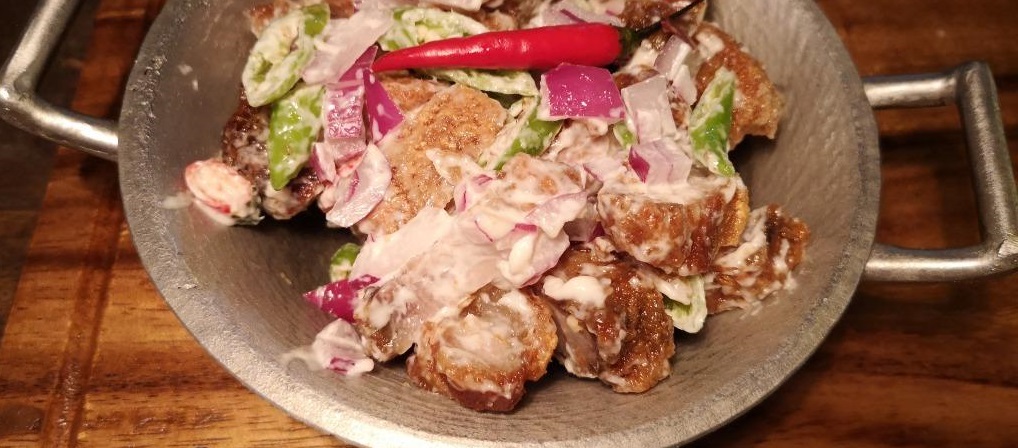
My lolo had one rule: “sunugin mo ng konti yung balat.” A quick pass over the flame. Not burnt. Just enough to catch that faint smoky smell before you chop. I didn’t understand it back then. Now I won’t make dinakdakan without it.
This crispy pata version swaps the traditional grilled pig ears and snout for deep-fried pork knuckles. Getting the crunch right is mostly about the fry and how long the skin dries before it hits the oil. The smokiness in a good version comes from one extra step most recipes don’t mention. And none of it works unless the acid is right at the end.
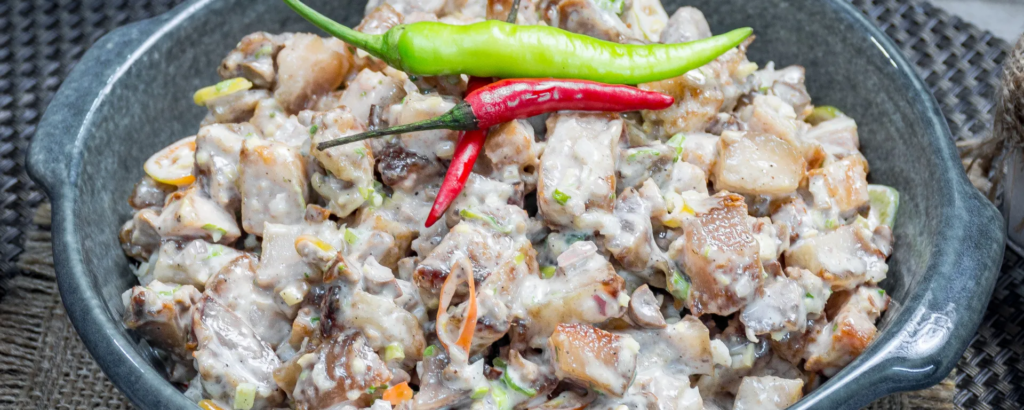
What is dinakdakan?
Dinakdakan is an Ilocano appetizer made from chopped pork parts, traditionally ears, snout, or face. The pork is grilled or boiled, then mixed with calamansi juice, siling labuyo, sliced onion, and ginger. A creamy binder, pig brain or mayonnaise, holds it together. Served cold or at room temperature, usually as pulutan or alongside rice.
It’s one of the most recognized dishes in Ilocano cooking, alongside pakbet Ilocano style and Ilocano sinanglaw. The flavor hits sour, spicy, salty, and slightly bitter from the char, all at once. Nothing subtle about it.
This crispy pata version uses deep-fried pork knuckles instead of the traditional pig parts. The technique shifts slightly. The soul of the dish doesn’t.
Crispy pata has made it onto food rankings outside the Philippines. TasteAtlas lists it as one of the top-rated Filipino dishes on its global food index. In 2024, it was among eight Filipino entries in TasteAtlas’ 100 Best Pork Dishes worldwide.
Brain or mayo: what’s the honest difference?
Pig brain gives a richer, more authentic flavor that clings to the meat in a way mayo doesn’t quite replicate. The taste has a depth you’d call “lutong probinsya.” But it’s unforgiving. Too much and the whole dish turns heavy, sometimes gamey.
Mayonnaise is lighter, cleaner, and easier to balance. Better for beginners or when cooking for people who aren’t used to the original. You lose some depth. You gain control.
| Pig brain | Mayonnaise | |
|---|---|---|
| Flavor | Rich, deep, “lutong probinsya” | Lighter, cleaner, more modern |
| Texture | Fuller, heavier | Smooth, less dense |
| Difficulty | Needs careful measuring | Easy to adjust on the fly |
| Best for | Family Ilocano gatherings | Everyday cooking, beginners |
The rule for both: the binder is a coating, not the main event. Add it slowly. Stop when it just covers everything. Overdo it and you’ve turned dinakdakan into a heavy pork salad.
How to pick the right pata at the market
I buy from a suki. When you have a regular vendor, quality stays consistent. New stall? Here’s what to check.
Go for the front leg (harapang pata) over the back leg. Better fat-to-meat balance. Less tough, easier to chop cleanly, holds its texture better after mixing. You also want a piece with some tendon and fat mixed in. Pure meat goes dry after frying and the dish tastes flat.
At the counter: smooth white skin, no dark spots, no off smell. Press the flesh lightly. Firm means fresh. Soft means it’s been sitting. Clean, even cuts from the butcher signal a vendor who handles meat properly.
The charring step most recipes skip
After frying, most recipes say: chop and mix. My lolo didn’t stop there.
Once the fried pata drains, hold it with tongs over a gas stove flame. Keep it moving. Quick passes over the fire, not sitting in one spot. Stop when the skin turns golden brown with light char marks and you catch the smoky smell. The moment it starts smelling burnt, you’ve gone too far.
Charcoal is better when you have it. “Pinapahalik ko lang yung balat sa init at usok.” Just passing the skin over the heat and smoke a few times until it blisters slightly. Not grilling it further. Just a kiss of smoke.
A kitchen torch works too. Short bursts, not continuous. The rule applies either way: “kulang is okay, sobra hindi na mababawi.” Underdo it and there’s no harm. Overdo it and you can’t fix it.
Ingredients
For the crispy pata:
- 1 kg pork knuckles (front leg preferred)
- 1 tbsp salt
- 1 tbsp whole peppercorns
- 4 cloves garlic, crushed
- 2 bay leaves
- Cooking oil for deep frying
For the dinakdakan mix:
- 1 medium red onion, thinly sliced
- 3 stalks green onion, chopped
- 2 thumbs ginger, minced
- 3 to 4 pieces siling labuyo, sliced thin
- 3 to 4 pieces calamansi, freshly squeezed
- 3 tbsp pig brain (cooked) or mayonnaise
- Salt and pepper to taste
How to cook crispy pata dinakdakan, step by step
Step 1: Boil the pork knuckles
Put the pork knuckles in a large pot. Cover with water. Add salt, peppercorns, garlic, and bay leaves. Bring to a boil, then simmer for 45 minutes to 1 hour. The meat should be fork-tender but still holding together. Don’t let it fall apart.
Step 2: Dry the skin completely
Remove the knuckles from the broth. Pat every surface dry with paper towels. Wet skin won’t crisp in the fryer and causes dangerous oil splatter. Let them rest on a rack for at least 20 minutes. Overnight in the fridge gets you crispier results the next day.
Step 3: Deep fry until blistered
Heat oil to 180°C. Carefully lower the pork knuckles in. Fry for 8 to 12 minutes, turning occasionally, until the skin is golden brown and blistered all over. It should crackle when you tap it. Drain on a wire rack, not paper towels. Paper towels trap steam underneath and soften the skin you just worked to crisp up.
Step 4: Char the skin lightly
Quick pass over the gas flame or charcoal. Thirty seconds to a minute, keep it moving. Stop at golden brown with light char. Skippable step. But don’t skip it.
Step 5: Rest before chopping
Let the pata rest for 10 to 15 minutes. This is where most first-timers rush. The skin firms back up as it cools slightly. Chop while hot and the crunch disappears before you’ve started mixing.
Step 6: Chop, mix, and serve
Cut into bite-size pieces, around 2 to 3 cm. Aim for a mix of crispy skin, fat, and meat in every piece. Add onion, ginger, green onion, and siling labuyo. Add the binder a little at a time. Squeeze calamansi in last, one piece at a time, tasting as you go. Season with salt and pepper. Serve right away.
Three mistakes that ruin it
Three failures come up again and again with first-timers.
Mistake 1: Mixing while hot. Hot pata steams under the sauce. The skin collapses fast and you end up with something soggy before the first bite. Rest first, always.
Mistake 2: Too much binder. Whether brain or mayo, too much overwhelms the acid and the pork. The binder should coat, not flood. Add a little, taste, stop when it just covers everything.
Mistake 3: Wrong acid balance. Two ways this fails. Too little calamansi and the dish tastes flat, like fried pork with toppings. Too much added all at once and it’s aggressively sour with nothing else coming through. Squeeze it in at the end, one calamansi at a time, tasting between each.
What to serve with crispy pata dinakdakan
Dinakdakan works both ways: as pulutan and as ulam. At family gatherings it usually starts as the main dish with rice. By the time the inumin comes out, it’s become the pulutan. Flexible like that.
For a full meal, pair it with sinigang or tinola. The broth cuts through the richness. A small plate of sliced tomato and onion, or atsara, adds a fresh contrast that resets the palate between bites.
Drinks: cold beer is the classic pairing. If you’re not drinking, iced tea or cold softdrinks cut the fat just fine. Cold is the requirement. Hot drinks and dinakdakan don’t work together.
For a complete Ilocano table, pair it with a bowl of Ilocano sinanglaw. One of the better food combinations in northern cooking. Find more traditional Filipino recipes at the WisePH delicacies page.
Tips straight from an Ilocano kitchen
- Rest 10 to 15 minutes before chopping. Every time, no shortcuts.
- Fresh calamansi only. Bottled juice is flat and slightly sweet. Fresh has a sharper bite that does the real work here.
- Binder goes in slowly. If you’re second-guessing whether to add more, you’ve added enough.
- Save the calamansi, fresh chili, and extra onion for last. Those last-minute additions are what give dinakdakan its life. Add them early and the brightness disappears.
- Wire rack after frying. Paper towels trap steam. Soggy skin is the result.
- The char step takes 30 seconds. The flavor difference is not 30 seconds worth of effort. It’s much more than that.
- Taste constantly while mixing. Dinakdakan is not a recipe you measure. It’s a recipe you calibrate.
The best version I’ve ever had was in a small kainan in Ilocos Sur. Nothing fancy. Real charcoal smoke. Barely any binder. The acid was exactly right. “Hindi lang sa recipe, nasa proseso at tiyaga talaga.” Not just the recipe. The patience behind every step.
For more Filipino food worth making, WisePH covers recipes and guides from across the country.
Frequently asked questions about crispy pata dinakdakan
What is the difference between dinakdakan and sisig?
Dinakdakan is Ilocano: served cold, seasoned with calamansi and ginger, no sizzle plate. Sisig is Kapampangan: served hot on cast iron, with liver in the mix. Both use chopped pork parts but the cooking method, temperature, and flavor are completely different dishes. If you want to compare them, this Pampanga original sisig recipe has the authentic Kapampangan version.
Can I use mayonnaise instead of pig brain?
Yes, and most home cooks do. Mayo gives a similar texture and is far easier to balance. The flavor is lighter than the original but it works well. Add it slowly either way. Stop when it just coats everything. Not before, not after.
Why does my crispy pata get soggy after mixing?
Three causes: the skin wasn’t fully dried before frying, it drained on paper towels instead of a wire rack, or it was mixed while still hot. The biggest fix is resting the fried pata for 10 to 15 minutes before you chop. That one step solves most texture problems.
Do I need to char the skin for authentic Ilocano dinakdakan?
Not required, but the flavor difference is real. A quick pass over the flame after frying adds a smoky depth you can’t get any other way. Thirty seconds to a minute, stop at golden brown with light char marks. The moment it starts smelling burnt, you’ve gone past it.
What is the best drink to pair with dinakdakan?
Cold beer. The carbonation and bitterness cut through the fat. If you’re skipping alcohol, iced tea or cold softdrinks work fine. The requirement is cold. Hot drinks and dinakdakan don’t belong together.











Comments 1