


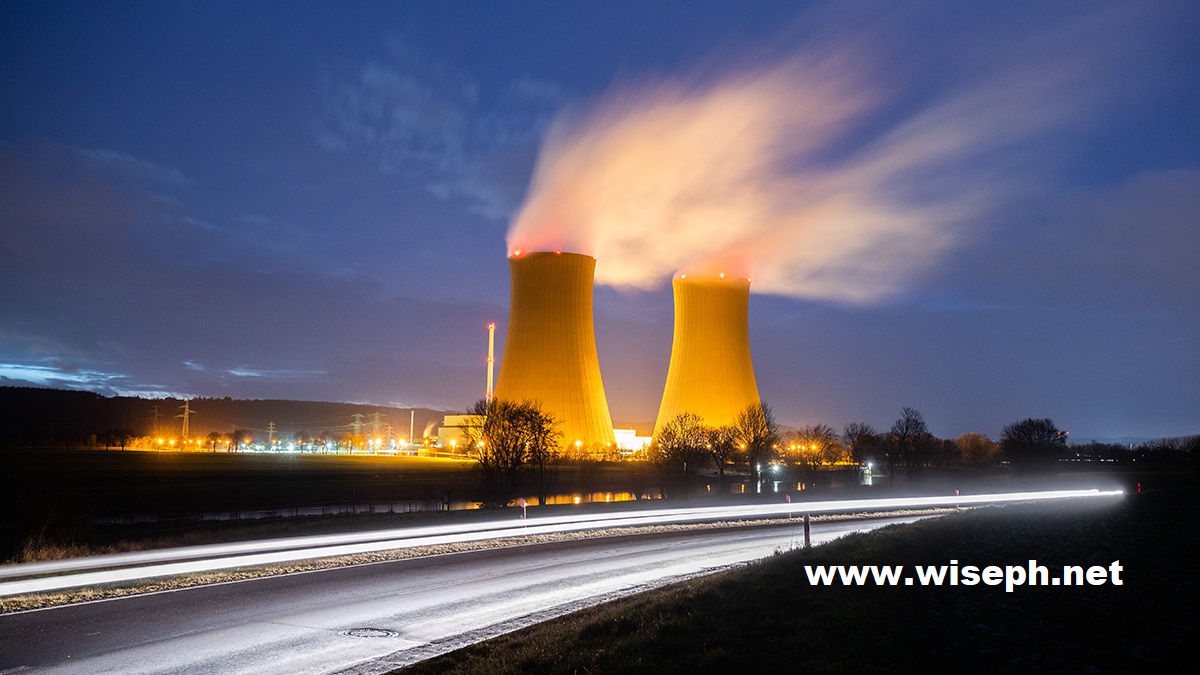
On March 24, 2026, President Ferdinand Marcos Jr. declared a state of national energy emergency. The trigger was the war in Iran and the closure of the Strait of Hormuz — the chokepoint through which roughly 98% of the Philippines’ oil imports pass. Energy prices surged. Luzon’s wholesale electricity prices jumped 52.5%, from ₱2.69 per kilowatt-hour to ₱4.10/kWh in a matter of weeks.
The crisis made one thing undeniable: the Philippines is dangerously dependent on fuel it does not produce and cannot control.
That vulnerability is exactly why the nuclear energy debate — which Marcos reopened in his first State of the Nation Address in 2022 — now carries far more weight than it did three years ago. This is not a theoretical discussion anymore. Rates are painful, the grid is under strain, and the government has already started moving.
Why the Philippines cannot keep running on coal and oil
Coal generates 56% of the country’s electricity. Oil and gas cover most of the rest. All three are imported and priced in dollars on global markets. Filipino consumers absorb every price shock that hits a region they cannot influence.
Filipino households already pay around $0.22 per kilowatt-hour on average — among the highest rates in Southeast Asia. For comparison, Vietnam and Thailand pay roughly half that. The gap is not small, and it directly affects the cost of running a business or a household.
Meanwhile, the Department of Energy projects that electricity demand will more than triple by 2040. Renewables alone will not close that gap fast enough. That is the hard math behind the nuclear push.
What the government has actually done since 2022
When Marcos raised nuclear energy in his 2022 SONA, a lot of it was still talk. By 2026, there is actual legislative and regulatory movement to show.
The biggest step came in September 2025 when Marcos signed Republic Act 12305, also known as the Philippine National Nuclear Energy Safety Act. The law created PhilATOM — the Philippine Atomic Energy Regulatory and Safety Authority — as the country’s first fully independent nuclear regulator. Before RA 12305, the Philippine Nuclear Research Institute handled both regulatory and promotional functions. That conflict of interest is now gone.
No nuclear facility can be sited, built, fueled, or operated in the Philippines without PhilATOM’s approval. That is a real legal safeguard, not just a policy statement.
In February 2026, 24 government agencies finalized a unified licensing and permitting flowchart for nuclear projects under the Nuclear Energy Program Inter-Agency Committee (NEP-IAC). Streamlining the regulatory path was one of the main blockers for private investors. That obstacle has been addressed.
The Department of Energy also released an investment circular in October 2025 designating the country’s first commercial nuclear plant as the “Pioneer NPP,” treating it as a baseload facility with priority dispatch rights. That designation matters to investors who need long-term revenue certainty before committing billions of dollars.
The Bataan Nuclear Power Plant: 40 years of waiting
The Bataan Nuclear Power Plant (BNPP) is one of the strangest stories in Philippine infrastructure. The plant was completed in 1984. It cost roughly $2.3 billion. It was built to produce 621 megawatts. And it has never generated a single kilowatt of commercial electricity.
After the 1986 Chernobyl accident, the Aquino administration shut it down before operations began. The plant sat mothballed in Morong, Bataan for nearly four decades, deteriorating while the Philippines paid off the loans used to build it.
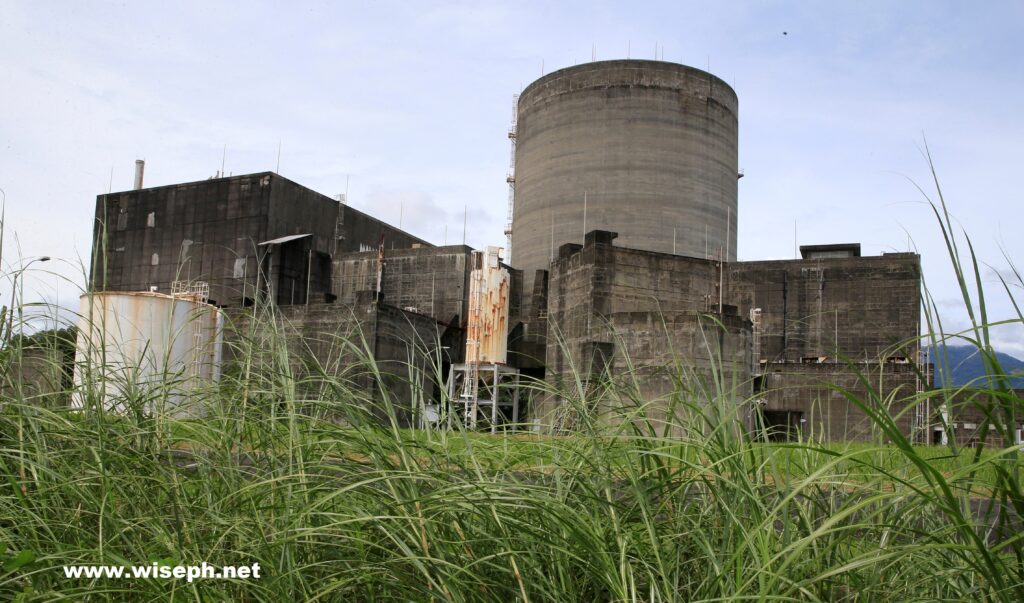
In January 2025, Korea Hydro and Nuclear Power (KHNP) began a two-phase technical and economic feasibility study on the BNPP. Phase one assessed the plant’s current physical condition. Phase two evaluated refurbishment options and costs. KHNP was due to complete the study in early 2026.
In March 2026, KHNP, the Korea Export-Import Bank, and Manila Electric Company (Meralco) signed a memorandum of understanding covering technology transfer and further studies. That three-way agreement signals real commercial interest — not just government-to-government diplomacy.
Estimated rehabilitation cost: around $2.3 billion. Whether that figure holds after the full KHNP study is unknown. What is clear is that the BNPP remains the fastest path to large-scale nuclear capacity in the Philippines, if the feasibility numbers work out.
Small modular reactors: the other option
Not everyone thinks the BNPP is the answer. Some energy planners argue that small modular reactors (SMRs) make more sense for the Philippines’ fragmented grid and island geography.
SMRs generate between 50 and 300 megawatts each. They are smaller, faster to build, and can be deployed in locations that would not suit a full-scale plant. In February 2026, the US Trade and Development Agency committed $2.7 million for Meralco PowerGen to evaluate US SMR designs and develop an implementation roadmap.
Earlier studies were conducted with NuScale (May 2023) and Ultra Safe Nuclear Corporation (November 2023). None of those have advanced to firm commitments yet — but the pre-feasibility groundwork is being laid on multiple fronts simultaneously.
The DOE’s Philippine Energy Plan targets at least 1,200 megawatts of nuclear capacity by 2032, doubling to 2,400 megawatts by 2045 and reaching 4,800 megawatts by 2050. Whether that comes from a rehabilitated BNPP, new SMRs, or a combination of both is still an open question.
The political debate then and now
Back in January 2023, then-Senate President Juan Miguel Zubiri was one of the loudest voices for nuclear power. His argument was blunt: Indonesia, Thailand, Vietnam, Malaysia, and even Myanmar were already studying nuclear options, while the Philippines had fallen behind. He wrote the Renewable Energy Act — so his endorsement carried weight with people who might otherwise dismiss nuclear as an anti-environment position.
Senator Loren Legarda took a more cautious stance. She said she was open to looking into nuclear energy but wanted it classified as “clean energy” and wanted clear answers on nuclear waste handling and safety protocols before committing.
Senator Francis Tolentino highlighted that nuclear power produces no direct emissions — a relevant point as the country faces pressure to reduce coal dependence.
Senator Sherwin Gatchalian called on the Department of Energy to produce a scientific briefing on nuclear energy for legislators. He argued that public funds spent studying the option should produce a document that actually guides policy decisions.
Policy momentum has since moved past debate. RA 12305 is law. PhilATOM is operational. Senators and DOE officials now work within a legal framework for nuclear development rather than arguing over whether to build one.
The concerns that still need answers
Nuclear power is not without legitimate risks. The Fukushima Daiichi accident in Japan in 2011 remains the most recent reminder. A 15-meter tsunami wave, triggered by a major earthquake, knocked out cooling and electricity systems for three reactors. Authorities evacuated over 100,000 people as a precaution. The World Nuclear Association reports no deaths directly from radiation. Disruption to communities and land use lasted years.
For the Philippines, seismic risk is a real concern. The BNPP sits in the Morong area of Bataan, and any rehabilitation plan would need to address proximity to earthquake faults explicitly. The International Atomic Energy Agency’s regulations, strengthened after Fukushima, require exactly this kind of site assessment before a plant can be approved.
Nuclear waste is the other standing question. The Philippines does not yet have a national repository or a clear long-term disposal plan for spent fuel. That gap needs to close before a commercial plant can realistically operate.
Those concerns are not reasons to stop the process. They are items on a checklist that PhilATOM, the DOE, and any eventual plant operator will need to work through systematically. The regulatory framework now exists to do exactly that.
Where things stand as of 2026
A May 2024 survey found that 70% of Filipinos believe nuclear energy can provide reliable electricity for the country. That public support exists alongside the 2026 energy emergency — which has only sharpened the conversation about energy independence.
Nuclear energy in the Philippines is no longer a debate about whether. That ship sailed when Marcos signed RA 12305 and PhilATOM opened its doors. Now the question is whether the BNPP can be rehabilitated at a cost that makes sense, and whether the first commercial SMR projects can attract the private investment needed to move from feasibility study to actual construction.
Six years remain before the 2032 first nuclear capacity target. For a country that spent 40 years paying for a plant that never ran, those six years will determine whether the investment finally pays off — or whether the Philippines misses the window again.
Frequently asked questions
What is the current status of nuclear energy in the Philippines?
As of 2026, the Philippines has passed RA 12305, which created PhilATOM as an independent nuclear regulator. Korea’s KHNP is finishing a feasibility study on the Bataan Nuclear Power Plant. The government’s target is first nuclear capacity of 1,200 megawatts by 2032.
What is the Bataan Nuclear Power Plant?
The BNPP is a 621-megawatt plant completed in 1984 in Morong, Bataan. It was mothballed before operations began after the 1986 Chernobyl accident. It has never generated commercial electricity. KHNP began a rehabilitation feasibility study in January 2025.
Why does the Philippines want nuclear power?
Filipino consumers pay some of the highest electricity rates in Southeast Asia. Coal generates 56% of power, and 98% of oil imports come from the Middle East. The 2026 energy crisis made that dependence impossible to ignore. Nuclear offers domestic, low-emission baseload power that is not tied to imported fuel prices.
What is PhilATOM?
PhilATOM is the Philippine Atomic Energy Regulatory and Safety Authority, created under RA 12305 signed in September 2025. It is the country’s first independent nuclear regulator. No nuclear facility can be built or operated in the Philippines without PhilATOM’s approval.
Is nuclear power safe for the Philippines given its seismic activity?
Seismic risk is a genuine concern. Any nuclear facility must meet updated IAEA safety standards, strengthened after Fukushima in 2011. The KHNP feasibility study includes a site assessment specifically evaluating the BNPP’s proximity to earthquake faults.