


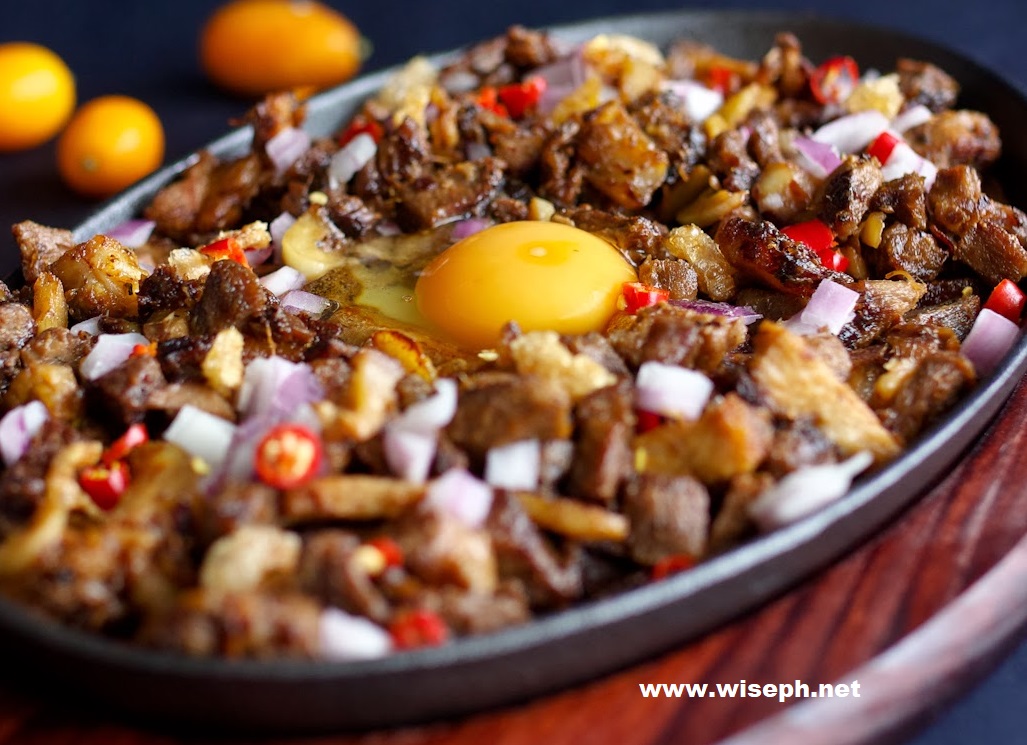
Most Filipinos think they’ve had sisig. They’ve had the sizzling version — the one that comes out on a cast-iron plate with egg cracked on top. That’s fine. It tastes good. But that’s not the original.
The original Pampanga sisig is older, simpler, and honestly more interesting. It came out of necessity, not restaurant menus. Kapampangans used what was left after slaughtering a pig: the face, the ears, the cheeks, and the liver. They boiled it, grilled it, chopped it fine, and dressed it with vinegar, calamansi, and chilies.
No sizzle. No egg. No cream. Just pork, acid, and heat.
I’ve been cooking and eating sisig my whole life. What I’m sharing here is the version closest to what Pampanga grandmothers actually made, not what you’ll find at a mall food court.
What makes original Pampanga sisig different
The word “sisig” comes from the Old Kapampangan word meaning “to snack on something sour.” That framing matters. The dish was originally eaten as a pulutan, a snack to go with drinks, and the sourness was the point.
Original sisig has three non-negotiable ingredients: pig face (maskara), pig ears (tainga ng baboy), and pork liver. Everything else is a debate. The ratio of liver to face meat is where most arguments start.
What separates it from modern versions:
- No sizzling plate — it was served on a banana leaf or simple plate
- No egg on top — that came with the restaurant era
- No mayonnaise — that’s a Visayan adaptation
- The texture is finely chopped, almost minced — not chunky cubes
- The sourness comes first: vinegar or calamansi, sometimes both
The history of sisig in Pampanga
The National Historical Commission of the Philippines traces sisig’s roots to the Kapampangan culinary tradition, where cooking with sour ingredients (vinegar, calamansi, unripe fruit) was central to the culture. Early accounts describe sisig as a sour preparation of unripe fruits or vegetables, given to pregnant women to manage food cravings.
The transition to pork happened organically in Pampanga’s pig-farming towns. When a pig was butchered, the prime cuts went to the main meal. The head, ears, and offal were secondary. To avoid waste, cooks boiled these parts until tender, let them cool, then grilled them directly over coals. Once cooled again, they chopped everything finely and dressed it with vinegar and chilies.
That process, boil then grill then chop, is the foundation of original Pampanga sisig. The double cooking creates a specific texture: tender inside, slightly charred outside, with enough fat content to carry the sour dressing without drying out.
The sizzling plate version came later. In the 1970s, Lucia Cunanan of Aling Lucing’s restaurant in Angeles City began serving sisig on a hot cast-iron plate and cracking a raw egg on top. That version spread across the country and became what most Filipinos picture when they hear the word. But in Pampanga, the original chopped version is still what older cooks make at home.
Original sisig ingredients and the liver question
Getting the liver ratio right is the most debated part of making original sisig. Too much liver and the dish turns bitter and muddy. Too little and you lose the flavor depth that separates sisig from plain grilled pork chops.
The working ratio most Kapampangan home cooks use: about 20 to 30 percent liver by weight against the total pork. For a standard batch using one whole pig face (roughly 1 kilogram of meat after cleaning), you want around 200 to 300 grams of liver.
The liver needs to be cooked separately from the face meat. If you boil everything together, the liver overcooks and turns grainy. Boil the pig face until fully tender (about 45 minutes to 1 hour). Grill the liver separately for 5 to 8 minutes per side, just enough to cook through without drying it out. Chop both finely, then combine.
According to USDA FoodData Central, pork liver is high in iron, B vitamins, and protein. A 100-gram serving provides around 26 grams of protein and covers your daily vitamin A needs several times over. The nutritional density is one reason older Kapampangans added liver in the first place, not just for flavor.
How to cook original Pampanga sisig (step by step)
This is the traditional home method. No cast-iron plate. No egg. Just the core technique that every variation builds on.
Ingredients (serves 4–6):
- 1 kg pig face (maskara), cleaned and hair-singed
- 2 pig ears, cleaned
- 250g pork liver
- 1 large white onion, finely diced
- 4–6 red chili fingers (siling labuyo), chopped
- 3 tablespoons white cane vinegar
- 6–8 calamansi, juiced
- Salt and black pepper to taste
- 4 cloves garlic, 2 bay leaves (for boiling)
Process:
- Clean the pig face and ears thoroughly. Singe off any remaining hair over an open flame, then scrub with coarse salt and rinse.
- Place face and ears in a pot. Cover with water, add garlic, bay leaves, and a tablespoon of salt. Bring to a boil, then simmer for 45 to 60 minutes until completely tender. The cartilage in the ears should be soft.
- Remove, drain, and let cool fully. Do not rush this. Chopping warm pork makes it mush.
- Grill the cooled face and ears over charcoal or a hot grill pan for 5 to 7 minutes per side. You want char marks and some crispiness on the skin.
- Grill the liver separately for 5 to 6 minutes per side. It should be cooked through but still slightly pink in the center. Overcooked liver turns bitter and chalky.
- Let everything cool again. Then chop everything finely, almost to a mince. The goal is small, uniform pieces about 3 to 5mm, not cubes.
- Combine pork and liver in a bowl. Add onion, chilies, vinegar, and calamansi juice. Toss well. Taste and adjust salt, acid, and heat to preference.
- Serve at room temperature on a banana leaf, or heat in a pan for 3 to 4 minutes if you prefer it warm.
Sisig variations: what changed and why
The sizzling plate version became popular because it’s dramatic and easy to eat at a bar. Lucia Cunanan’s version at Aling Lucing’s in Angeles City added the cast-iron presentation, the egg, and eventually calamansi on the side as a table condiment. That format spread nationally in the 1980s and became the default.
From there, the variations multiplied. Chicken sisig replaced the pork for people who avoid red meat. Bangus sisig used milkfish belly. Tofu sisig became the vegetarian default. Each version kept the sour-spicy dressing and the finely chopped texture. The cooking method changed, but the flavor logic stayed the same.
If you want to try another Pampanga-style pork dish before attempting sisig, start with lechon baboy. It uses similar pork prep skills and gets you comfortable with whole-pig cooking before you work with offal.
The Food and Nutrition Research Institute (FNRI-DOST) notes that traditional Filipino dishes made with organ meats tend to have higher micronutrient density than muscle-meat-only versions. Original sisig, with its liver component, falls into that category.
Common mistakes when making sisig at home
The biggest one: skipping the grill step after boiling. Some recipes tell you to just boil and chop. That produces wet, bland sisig with no depth. The char from the grill is not optional. It adds the smoky bitterness that balances the sour dressing.
Other mistakes I’ve seen:
- Using bottled calamansi juice instead of fresh — the flavor is flat and slightly metallic
- Chopping the pork while it’s still warm — it compresses and turns mushy
- Adding the vinegar too early — acid toughens meat if it sits too long before serving
- Over-seasoning with soy sauce — soy sauce makes it darker and changes the flavor profile away from the original
- Using too little fat — some cooks trim all the skin and fat, which kills the texture and richness
Sisig is one of those dishes where the fat does real work. The skin and cheek fat from the pig face carry the sour dressing and distribute it across the whole bowl. A fully trimmed, lean version of sisig is not really sisig anymore.
If you enjoy bold, fatty Ilocano pork cooking, Ilocano pinakbet is worth learning alongside sisig. Both dishes use strong aromatics and respect pork fat as a feature, not a flaw.
Serving sisig the right way
Original sisig is a pulutan first. It’s meant to be eaten in small portions alongside cold drinks, not as a main course with rice. The intense sourness and saltiness is calibrated for that context.
If you’re serving it as a main dish, serve with plain steamed rice to balance the acid and fat. Add extra calamansi and chilies on the side so people can adjust to their taste. Do not pre-dress the whole batch. Let people add their own acid at the table.
The traditional banana leaf presentation is worth doing at least once. The leaf imparts a faint herbal aroma and keeps the dish at the right temperature as it cools. It also looks right. Sisig on a banana leaf communicates something about the food that a ceramic plate doesn’t.
Kapampangans are proud of their food heritage, and sisig is the dish they’re most territorial about. If you want to explore the full range of Filipino delicacies from Pampanga and beyond, the cooking philosophy behind sisig, use everything, waste nothing, let the acid do the work, runs through most of them.
For another look at how Ilocano cooks handle offal and bold flavors, Ilocano sinanglaw uses bile and vinegar in a way that parallels sisig’s sourness, just in a very different direction.
Frequently asked questions about original Pampanga sisig
What is original Pampanga sisig made of?
Original Pampanga sisig uses pig face (maskara), pig ears, and pork liver. These are boiled until tender, then grilled over charcoal, cooled, and chopped finely. The dish is dressed with white vinegar, calamansi juice, chopped onion, and red chilies. No egg, no mayonnaise, no sizzling plate in the traditional version.
Who invented sisig?
Sisig originated in Pampanga as a way to use leftover pig parts after butchering. The modern sizzling version was popularized by Lucia Cunanan (Aling Lucing) in Angeles City in the 1970s, who added the cast-iron plate and egg. The chopped pork preparation with sour dressing predates her version by generations.
How much liver should I add to sisig?
For 1 kilogram of pig face, use 200 to 300 grams of pork liver — roughly 20 to 30 percent by weight. Less liver gives a milder dish where the pork fat flavor leads. More liver risks bitterness and an overpowering metallic taste. Grill the liver separately and chop it fine before combining with the pork.
Why is sisig sour?
Sisig is sour because the word itself comes from the Old Kapampangan term meaning “to snack on something sour.” The vinegar and calamansi dressing cuts through the fat of the pig face and liver, making it sharp and appetite-stimulating. It was traditionally served as pulutan, a snack with drinks.
Can I make sisig without pig face?
You can substitute pork belly or pork shoulder for the pig face if the face is unavailable, but the texture and fat content will be different. Pig face has a unique combination of skin, cartilage, and cheek fat that gives original sisig its specific mouthfeel. Pork belly versions are acceptable but are technically a variation, not the original dish.