

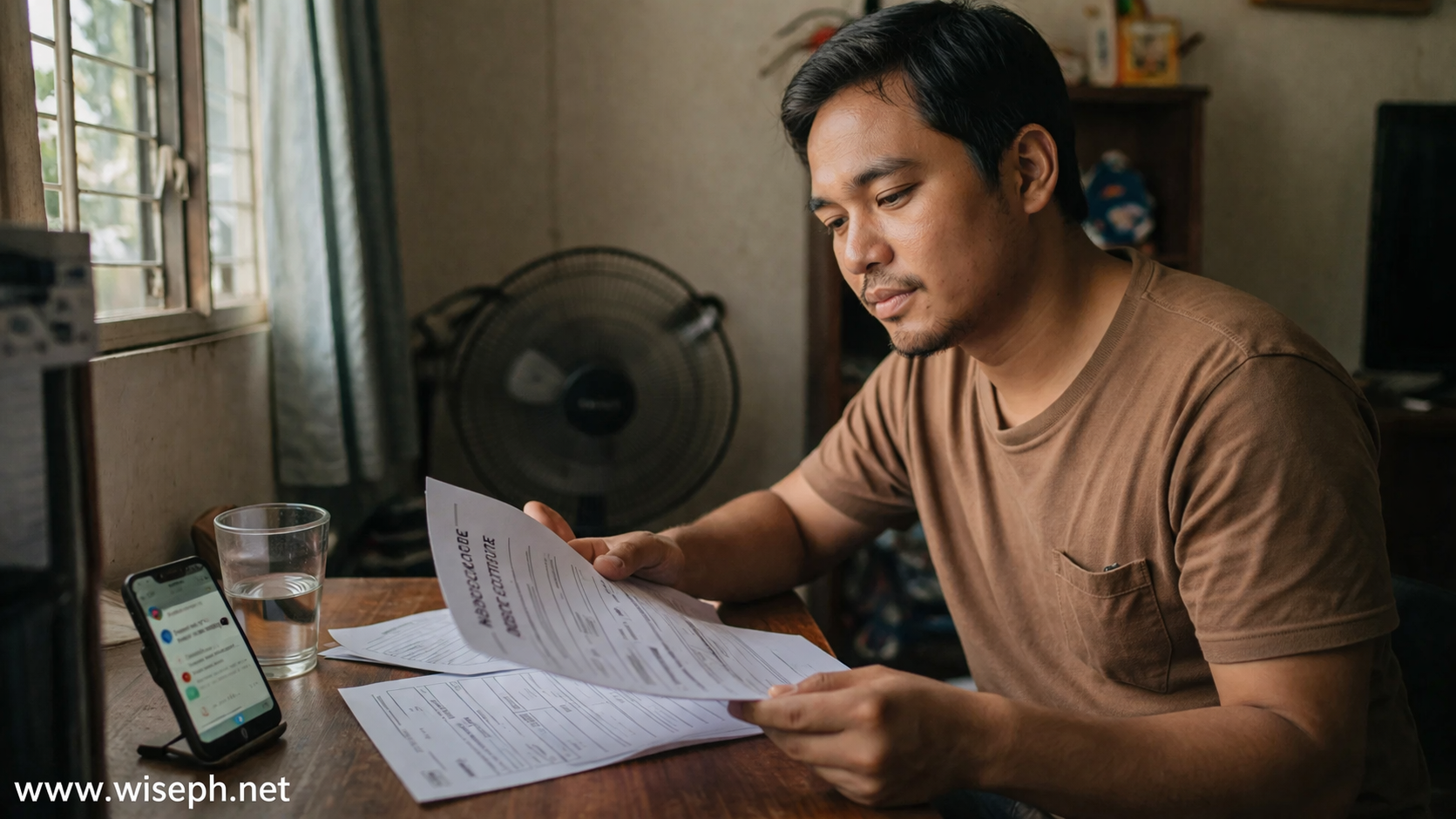
My wife spent several days in the hospital for dengue. I hadn’t slept properly in two days. Paperwork was not something I was thinking about — but I’m glad I eventually did.
What followed was a mix of hospital runs, corrected documents, and a lot of follow-up calls. In the end, the SSS sickness benefit helped us recover financially, not just physically. I also went through a similar process later when I got pneumonia and had to stop working for several weeks.
This guide covers both experiences. What actually happens when you file, what trips people up, and what to do the moment you realize you’re too sick to work.
What is the SSS sickness benefit?
The SSS sickness benefit is a daily cash allowance paid to members who cannot work because of sickness or injury. It covers both hospitalized cases and home rest, as long as a licensed doctor certifies the number of days you need to recover.
The legal basis is Republic Act 11199, the Social Security Act of 2018, which governs all SSS benefit programs.
| Item | Details |
|---|---|
| Who can claim | Employed, self-employed, voluntary, OFW members |
| Minimum contributions needed | 3 monthly contributions in the 12 months before the semester of illness |
| Maximum claimable days | 120 days per calendar year |
| Waiting period | First 3 days not paid |
| Payout basis | 90% of your average daily salary credit |
This is not a salary replacement. SSS calculates the amount from your salary credit, not your actual daily wage. That number surprised my coworkers every time they found out.
Who can file a claim?
You can file if you meet all three conditions: you’re an active SSS member, you have at least 3 monthly contributions in the 12-month period before the semester your illness started, and you lost income because you were unable to work.
Employed members, self-employed workers, freelancers, voluntary members, and OFWs all qualify. The key is your contribution history. Gaps in the right months can disqualify you.
If you’re still building your understanding of the system, read this first: why SSS membership matters. Benefits like this one are exactly what your contributions are building toward.
How much will you receive?
Your daily benefit is 90% of your average daily salary credit (ADSC). Here’s the formula SSS uses:
Daily Benefit = (Sum of 6 highest monthly salary credits ÷ 180) × 90%
| Monthly Salary Credit | Daily Benefit | 7 Payable Days (10-day illness minus 3) |
|---|---|---|
| ₱5,000 | ₱150/day | ₱1,050 |
| ₱15,000 | ₱450/day | ₱3,150 |
| ₱30,000 | ₱900/day | ₱6,300 |
The first 3 days are never paid. A 10-day illness gives you 7 payable days, not 10. That gap surprised me when my claim came back lower than expected.
The formula uses your salary credit, not your take-home pay. For most workers, those two numbers aren’t the same. To understand how SSS determines salary credits, read our guide on how SSS contributions are computed.
What documents do you need?
Three documents are non-negotiable. Missing any one will stall your claim.
1. SSS Medical Certificate (Med 01688)
Your doctor fills this out with the diagnosis, the illness start date, and the certified number of rest days. Every date on this form must match your other documents exactly. One day off and SSS will flag it.
2. Supporting medical records
For hospitalized or prolonged cases, attach lab results, X-rays, hospital records, or diagnostic test results. A dengue claim without a complete blood count, for example, is going to raise questions at processing.
3. The correct SSS sickness form
Three types depending on your situation:
- Sickness Notification — filed early to inform SSS you are sick
- Sickness Benefit Application — the actual claim form
- Sickness Benefit Reimbursement — if your employer already paid your salary during sick leave
What many people miss: if your doctor certifies home rest days after hospital discharge, those days can be included in the benefit. But only if the medical certificate states them explicitly. Do not assume SSS will count them automatically. My wife’s dengue claim had to be corrected and resubmitted because the post-discharge rest days weren’t written clearly on the certificate.
How to file: employed vs. self-employed
If you’re employed
- Notify your employer as soon as you know you can’t work
- Employer files the Sickness Notification with SSS within 5 days of receiving your notice
- Gather your documents: Med 01688, supporting medical records, and the correct SSS sickness form
- Submit through your employer or directly at an SSS branch
- Benefit is credited to your registered disbursement account or bank
If you’re self-employed or a voluntary member
- File the Sickness Notification directly with SSS — no employer does this for you
- Check your posted contributions on the SSS My.SSS portal before filing
- Prepare and submit all documents yourself
- Handle all follow-up personally
A friend who runs a small online business went through this alone. She said the process wasn’t harder — it was just more stressful. No HR to catch mistakes. Every error comes back to you directly.
Once approved, benefits are credited to your linked bank account. Some members use the MySSS RCBC DiskarTech card for receiving SSS payouts digitally, especially those without a traditional savings account.
Common reasons claims get delayed or rejected
Most articles tell you what to submit. Few tell you what kills a claim.
Date mismatches
My wife’s dengue claim got flagged because two dates on the medical certificate didn’t match the hospital discharge summary. Just two days off. We had to go back to the hospital, wait for the doctor — who wasn’t always available — get the certificate corrected and re-signed, then resubmit. That single correction added a week to the process.
Late notification
The deadlines are strict. I didn’t fully understand this before my pneumonia claim. I focused on recovering, then thought about paperwork later. By the time I checked, I was close to the cut-off. Missing the window means a denied or reduced benefit. There’s no appeal for “I didn’t know.”
Missing supporting documents
Submitting Med 01688 alone isn’t enough for complicated cases. If you were hospitalized or had tests done, attach all records. A claim with missing attachments sits in queue until someone flags it for correction.
Employer-member mismatch
For employed members, your employer’s submission must align exactly with your medical documents. On my pneumonia claim, HR’s report had a one-day difference from what my doctor certified. That one day caused a delay. I had to coordinate with HR, have them correct and resubmit, before processing could continue.
Contribution gaps
If your employer didn’t remit your contributions on time, those months may not appear in your SSS record. Log into My.SSS before filing and verify your posted contributions. Filing with gaps you don’t know about leads to denials you won’t see coming.
What to do in the first 24 hours
Don’t wait until you feel better.
Notify your employer or SSS as soon as you know you can’t work. Even without complete documents yet, getting that notification logged is what protects your deadline. Paperwork can be corrected — a missed notification window cannot be undone.
At your first doctor’s visit, ask them to clearly state the diagnosis and the exact number of certified rest days on the medical certificate. That document is the foundation of your entire claim. If the dates are vague or the rest period is unclear, everything slows down. Get it right on day one.
Frequently asked questions about SSS sickness benefit
What is the filing deadline for SSS sickness benefit?
Employed members must notify their employer within 5 days of getting sick. The employer then has 5 days to notify SSS. Self-employed members file the notification directly with SSS within 5 days. Missing these windows can result in a denied or reduced claim.
Does SSS pay for home rest after hospitalization?
Yes, but only if your doctor explicitly states the home rest period on the medical certificate. SSS will not count those days automatically. Have your doctor clearly indicate the post-discharge rest days on Med 01688.
Can self-employed members claim SSS sickness benefit?
Yes. Self-employed, voluntary, and OFW members can claim as long as they have at least 3 monthly contributions in the 12 months before the semester of illness. The process is the same, but you file directly with SSS instead of going through an employer.
What is the 3-day waiting period?
The first 3 days of every sickness are not covered. SSS pays starting on the 4th day. For short illnesses of 3 to 4 days, the payable amount is very small or zero. The waiting period resets for each separate illness episode.
How long does it take to receive the benefit?
In my experience, a few weeks to about a month from complete document submission to payment. Delays happen when documents are incomplete or contain mismatches. Filing early and submitting everything correctly from the start makes a real difference.