

Agarwood farming gets marketed as the tree that makes you rich. The reality is more complicated. As someone working in Philippine agriculture, the biggest gap I see is between what the marketing promises and what the farm actually looks like after year three.
This guide covers what agarwood farming in the Philippines actually involves: realistic costs, permits, the right species to plant, how inoculation works, and how to earn while your trees are still growing. If you own land in the province and are seriously considering this, read this before spending anything.
What is agarwood and why does it cost more than gold?
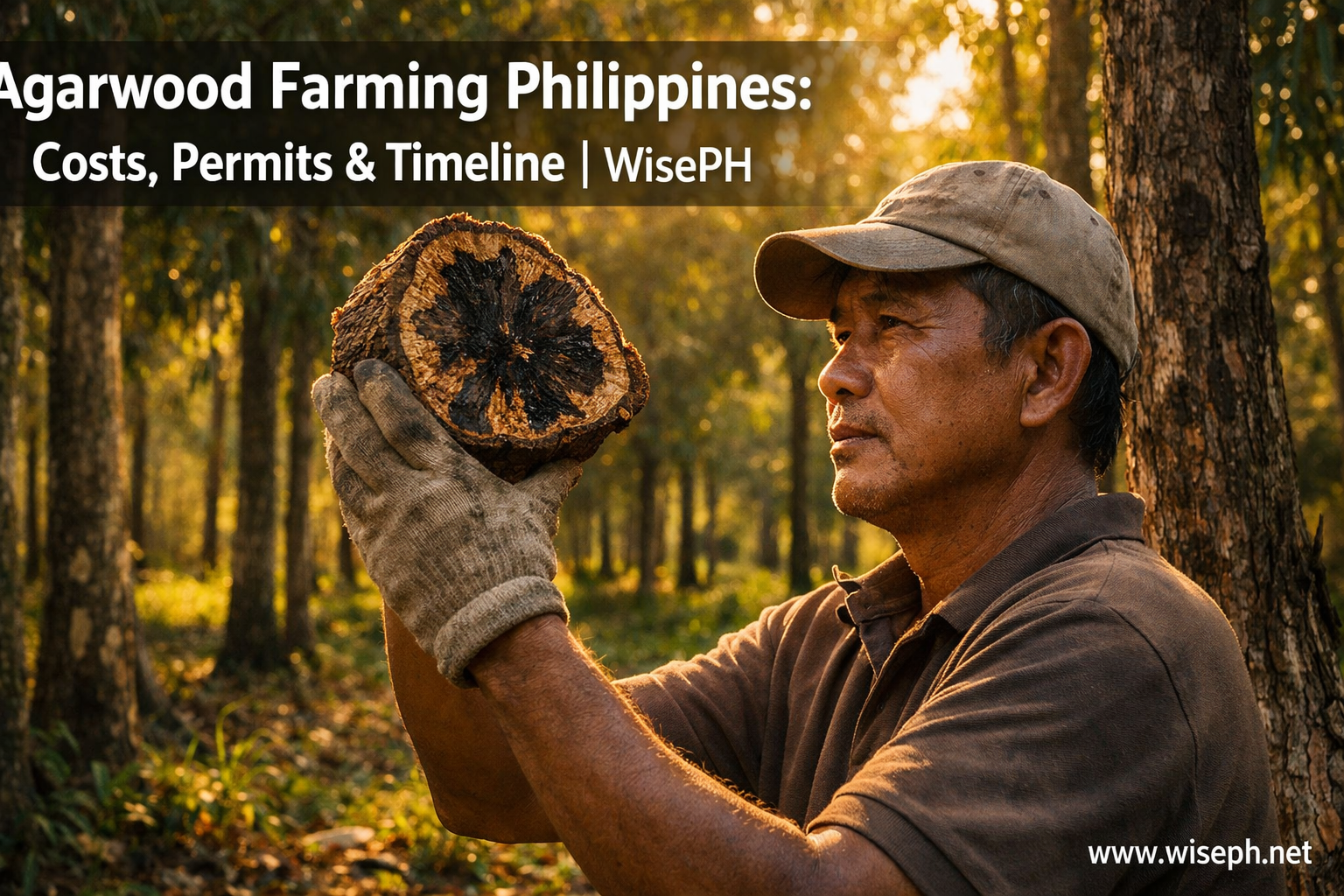
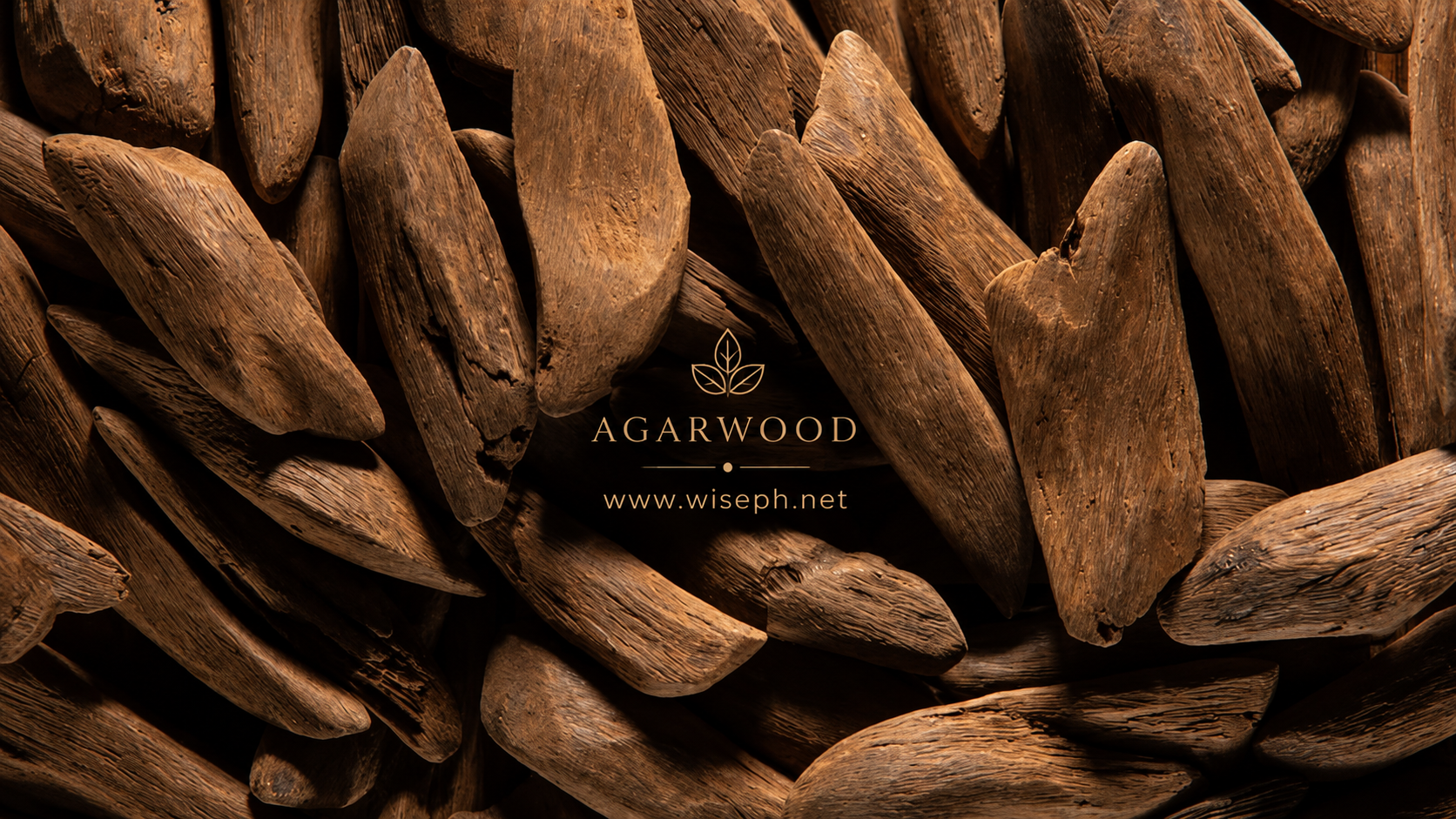
Agarwood is the dark, resin-filled heartwood that forms inside Aquilaria trees, locally called lapnisan. One kilogram of high-grade material sells for anywhere from ₱40,000 to over ₱300,000, based on a study of Philippine online agarwood trading groups published on ResearchGate.
A healthy Aquilaria tree can grow for years and show zero commercial resin inside. Resin only forms after the tree is stressed, wounded, or infected. Even then, the output is unpredictable. Scarcity drives the price.
| Grade | Description | Estimated price per kg |
|---|---|---|
| Low grade | Light wood, low resin content | ₱40,000 to ₱80,000 |
| Mid grade | Moderate resin, partial darkening | ₱80,000 to ₱150,000 |
| High grade | Deep resin, strong aroma | ₱150,000 to ₱300,000+ |
| Sinking grade | Extremely dense, very rare | ₱300,000 and above |
Most buyers are not in a regular commodity market. They are local traders, export consolidators, and direct foreign buyers, particularly from the Middle East where oud incense culture drives demand. Many transactions happen through private networks and Facebook groups rather than open-market pricing boards.
Is agarwood farming worth it in the Philippines?
Yes, for landowners with patience, existing provincial land, and a serious long-term plan. No, for anyone chasing a five-year shortcut.
Many companies advertise five-year harvests. Premium resin does not work that way. Meaningful returns on high-grade material realistically take 8 to 15 years, depending on the species, inoculation method, and farm management. Lower-grade material can come earlier, but the price drops significantly at those grades.
- Startup cost for one hectare: ₱85,000 to ₱535,000
- Profit timeline for premium grade: 8 to 15 years
- Not every tree produces sellable resin
- Permits are required before planting
- Intercropping and leaf tea generate income in the early years while your plantation matures
If you already own land in the province, agarwood farming makes stronger financial sense because land acquisition is not added to the total cost. For anyone buying land specifically for agarwood, however, run the full numbers carefully first.
Which Aquilaria species should you plant in the Philippines?
For most Philippine landowners, Aquilaria cumingiana is the safest starting point. It is native to the Philippines and has local research behind it covering germination, rooting, and vegetative propagation under actual Philippine conditions. That local data matters because plantation guides from Thailand or Indonesia were built for a different climate and regulatory framework.
The other native option is Aquilaria malaccensis, locally called lapnisan. DENR lists it as an indigenous species and a major agarwood source in the country. Both are legally plantable with the right permits and seedlings sourced from legal propagation nurseries.
Avoid Aquilaria crassna unless you are prepared for a complex permitting process. Importing its seeds requires a CITES Import Permit with prior clearance from the DENR Secretary. That is a significantly harder regulatory path for a first-time grower. Use legally sourced native planting material first.
How much does it cost to start one hectare?
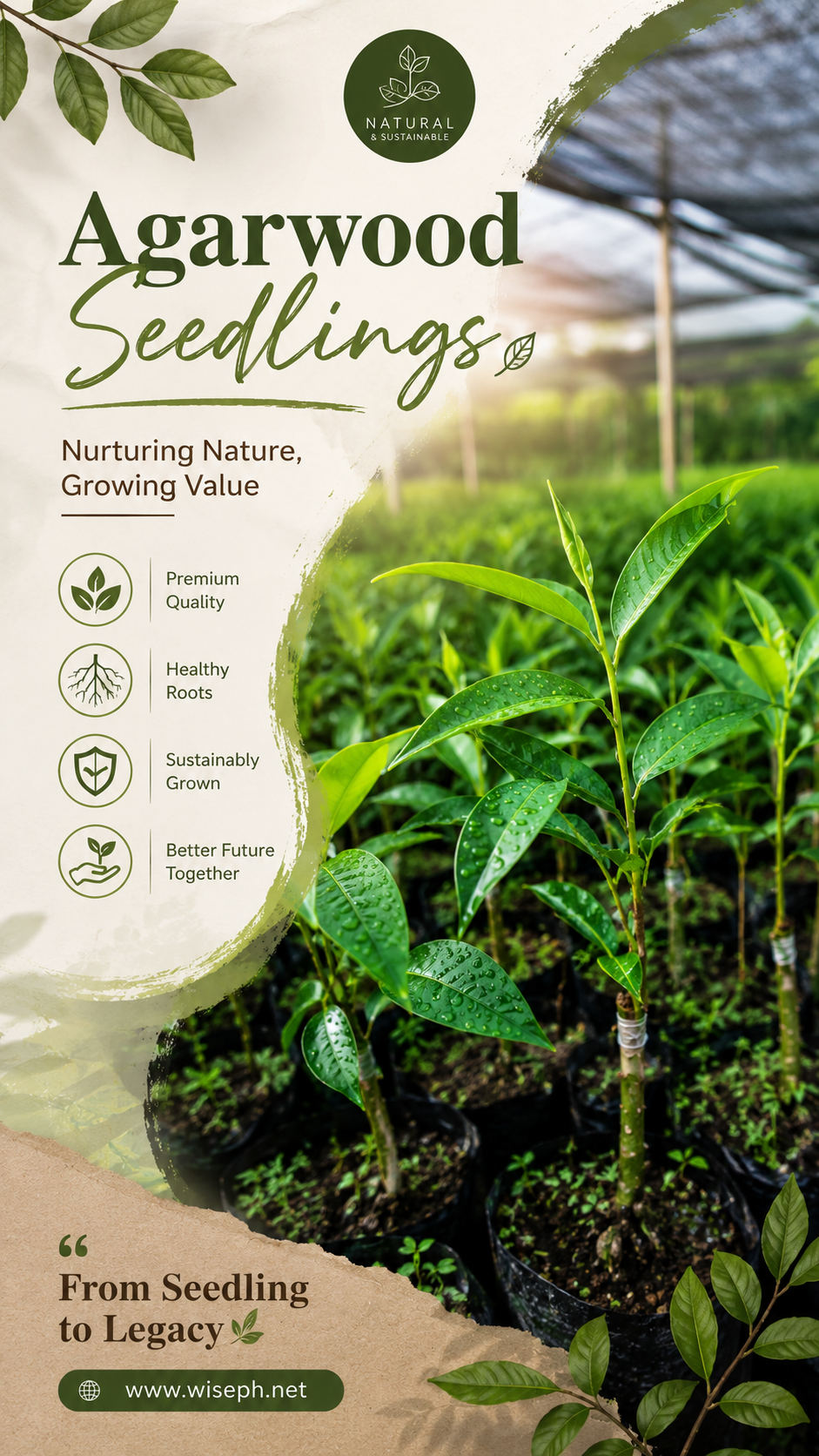
At 3 m x 3 m spacing, one hectare holds about 1,111 trees. Seedling prices in Philippine markets range from ₱25 to ₱350 per seedling, and that spread alone explains why the first-year budget varies so widely.
| Expense item | Estimated range |
|---|---|
| Seedlings (₱25 to ₱350 each) | ₱27,775 to ₱388,850 |
| Land clearing, staking, hole digging | ₱20,000 to ₱45,000 |
| Planting and early maintenance labor | ₱25,000 to ₱60,000 |
| Mulch, fertilizer, guards, watering | ₱10,000 to ₱30,000 |
| Permits, transport, paperwork | ₱3,000 to ₱12,000 |
| Total first year | ₱85,775 to ₱535,850 |
Do not budget for inoculation in year one. Research consistently shows inoculation is done on mature trees, often five years old or older. Instead, set that money aside as a separate reserve.
Labor rates vary by region. In the Cordillera Administrative Region, the current daily minimum wage is ₱505 per worker, which serves as a useful planning floor for farm labor budgeting.
Government loans that can help cover startup costs
The DA-ACPC ANYO program offers individual small farmers up to ₱300,000 at 2% interest, payable over up to five years. For farmers aged 18 to 30, the KAYA program offers up to ₱500,000 at 0% interest with no collateral required. Both programs require RSBSA registration. Ask your Municipal Agriculture Office for help with the application.
For larger setup costs, ACEF through LANDBANK goes up to ₱1,000,000 for individual farmers covering farm inputs and improvements. If you want to model how long-term investments compound alongside your agarwood timeline, the compound interest calculator on WisePH can help you run those scenarios.
How does inoculation actually work?
Inoculation is how you trigger resin formation inside the tree. Two methods are used in Philippine agarwood plantations.
Wounding: A drill creates small holes spaced evenly around the trunk. The tree responds by producing resin around the stress points. Fungal inoculation: Specific fungal strains are introduced through those same drilled holes. With advanced methods, resin can become detectable 12 to 18 months after the procedure, though quality varies widely even within the same row of trees.
Tree age, trunk diameter, site conditions, and aftercare all determine the result. Inoculate a weak or poorly sited tree and you often get little to no resin. Some trees die from the stress of premature inoculation. Even well-managed trees in the same plantation can produce inconsistent results from the same inoculation batch.
This is a skilled procedure requiring proper timing and tree readiness. Anyone selling inoculation as a guaranteed outcome is oversimplifying a process that Philippine researchers are still studying and refining.
How do you earn while you wait for harvest?
Intercropping is the most practical option. A Philippine study on unmatured agarwood plantations found that chili, okra, and corn planted between the trees generated profitable side income without negatively affecting tree growth. Start this in year one and keep it running until the canopy closes.
Agarwood leaf tea is the second option. DOST-FPRDI developed a standard process for Bari Tea made from agarwood leaves. Leaves can be harvested without cutting or stressing the tree, meaning you can sell a product years before the wood is ready. The market is still niche, but it is government-backed research.
Seedling sales add a third layer once your farm is established. With proper permits, selling legally propagated seedlings to other growers adds income that does not depend on your own harvest timeline.
Farmers who want to compare how other patient savings options grow alongside an agarwood investment can use the MP2 Pag-IBIG savings calculator to model both timelines side by side.
What permits does DENR require?
RA 9147 (Wildlife Resources Conservation and Protection Act) and PD 705 (Forestry Reform Code) govern agarwood in the Philippines. Moving or selling it without proper paperwork is a criminal offense, not just an administrative issue.
| Stage | Permit required |
|---|---|
| Starting your plantation | Wildlife Culture Permit (WCuP) from DENR Regional Office |
| Sourcing seedlings | Legal, traceable sources only |
| Moving seedlings or harvested wood | Local Transport Permit |
| Exporting agarwood | CITES export permit from DENR-BMB; 3% export-value fee plus ₱300 inspection fee |
As of 2026, only 11 Wildlife Culture Permit holders operate in DENR Region 12, according to the Philippine Information Agency. In 2025, customs officials at Mactan-Cebu International Airport seized 11 kilograms of agarwood misdeclared as plant material, valued at ₱8.4 million and bound for Malaysia and the UAE.
Start your permit application before you buy seedlings. The DENR Regional Office is your first stop, not a seedling company or investment group.
Government programs for agarwood farmers
No single government program is labeled specifically for agarwood. Several accessible channels apply directly to this type of long-cycle farming venture.
Financing options
- DA-ACPC ANYO – Up to ₱300,000 at 2% interest; up to 5-year term based on cash flow; for individual small farmers registered under RSBSA
- DA-ACPC KAYA – Up to ₱500,000 at 0% interest, no collateral; for agripreneurs aged 18 to 30
- ACEF through LANDBANK – Up to ₱1,000,000 for individual farmers covering farm inputs, equipment, and improvements
- LANDBANK AGRISENSO Plus – Low-interest working capital and agricultural equipment loans for farmers and agri-stakeholders
Technical support
- DOST-FPRDI – Research on agarwood leaf tea standardization, processing, and value-adding; conducts grower orientations and hands-on training on incense and fragrance products
- DENR Regional Office — Permit guidance and information on legally sourced native planting material
Register under RSBSA first. Most DA programs require it, and consequently your Municipal Agriculture Office handles the registration process and can endorse your loan application directly.
Six mistakes that kill agarwood plantations
Most failed plantations share the same problems. Specifically, the six errors below appear repeatedly across Philippine agarwood farms, and knowing them before you plant costs nothing.
- Unverified seedling sources. DENR regulates agarwood propagation tightly. Seedlings must come from legal, documented sources. A social media seller with no paper trail is a compliance risk before you plant a single tree.
- Wrong spacing. Too close creates light competition and makes maintenance harder as trees grow. Use 3 m x 3 m as a baseline.
- Planting in waterlogged areas. Aquilaria malaccensis does poorly in flooded or poorly drained soil. Well-drained sites, preferably on a slope, produce better results.
- Inoculating too early. Trees that have not reached adequate trunk diameter and age often die from the procedure. Most research supports waiting until at least year five.
- Treating permits as an afterthought. The Wildlife Culture Permit comes before planting. Getting caught without it is a criminal matter under RA 9147.
- Expecting every tree to produce premium resin. Resin formation is inconsistent by nature. Some trees in the same plantation produce little to nothing regardless of care or inoculation method.
Frequently asked questions about agarwood farming in the Philippines
Is agarwood farming legal in the Philippines?
Yes. But cultivating Aquilaria trees requires a Wildlife Culture Permit from your DENR Regional Office. Moving or selling agarwood without a Local Transport Permit is a criminal offense under RA 9147, not a paperwork technicality.
How long before agarwood trees produce income?
Intercropping with chili, okra, or corn starts from year one. Agarwood leaf tea is possible within a few years. Premium-grade resin harvest realistically takes 8 to 15 years depending on species and inoculation method.
How much can I earn per kilogram of agarwood?
Philippine online trading data shows prices from ₱40,000 to over ₱300,000 per kilogram depending on grade. The highest sinking-grade material can exceed ₱300,000, but that quality is rare for new growers.
What is the best Aquilaria species for Philippine conditions?
Aquilaria cumingiana and Aquilaria malaccensis are the safest choices. Both are native, have local propagation research behind them, and carry fewer permitting complications than exotic species like A. crassna.
Can I get a government loan for agarwood farming?
Yes. DA-ACPC ANYO offers up to ₱300,000 at 2% interest for registered small farmers. The KAYA program offers up to ₱500,000 at 0% interest for agripreneurs aged 18 to 30. LANDBANK’s ACEF program goes up to ₱1,000,000 for individual farmers.
Start with the right foundation
The farmers who succeed in agarwood are willing to study the crop, wait out the timeline, and handle the permits correctly from day one. This is not a tree you plant and forget. It is a serious forestry project with real international demand behind it, but only for those who approach it seriously.
Get your DENR permit first. Choose a native species. Plan intercropping from day one. Treat inoculation as a year-five decision, not a year-one expense.
For more agri-business opportunities available to Filipinos, browse the WisePH agri-business category for guides on other high-value crops, government loans, and farming programs worth exploring.