


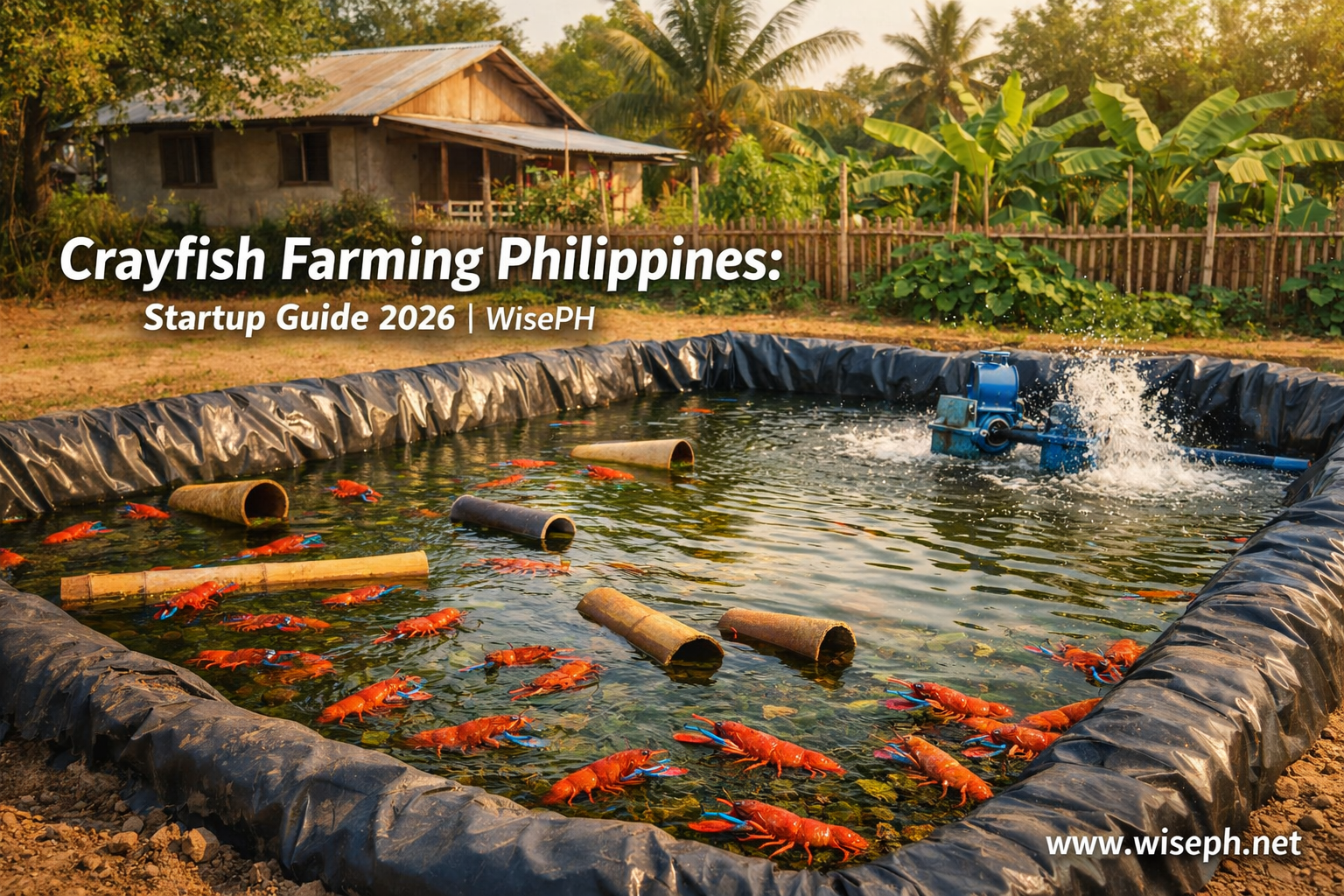
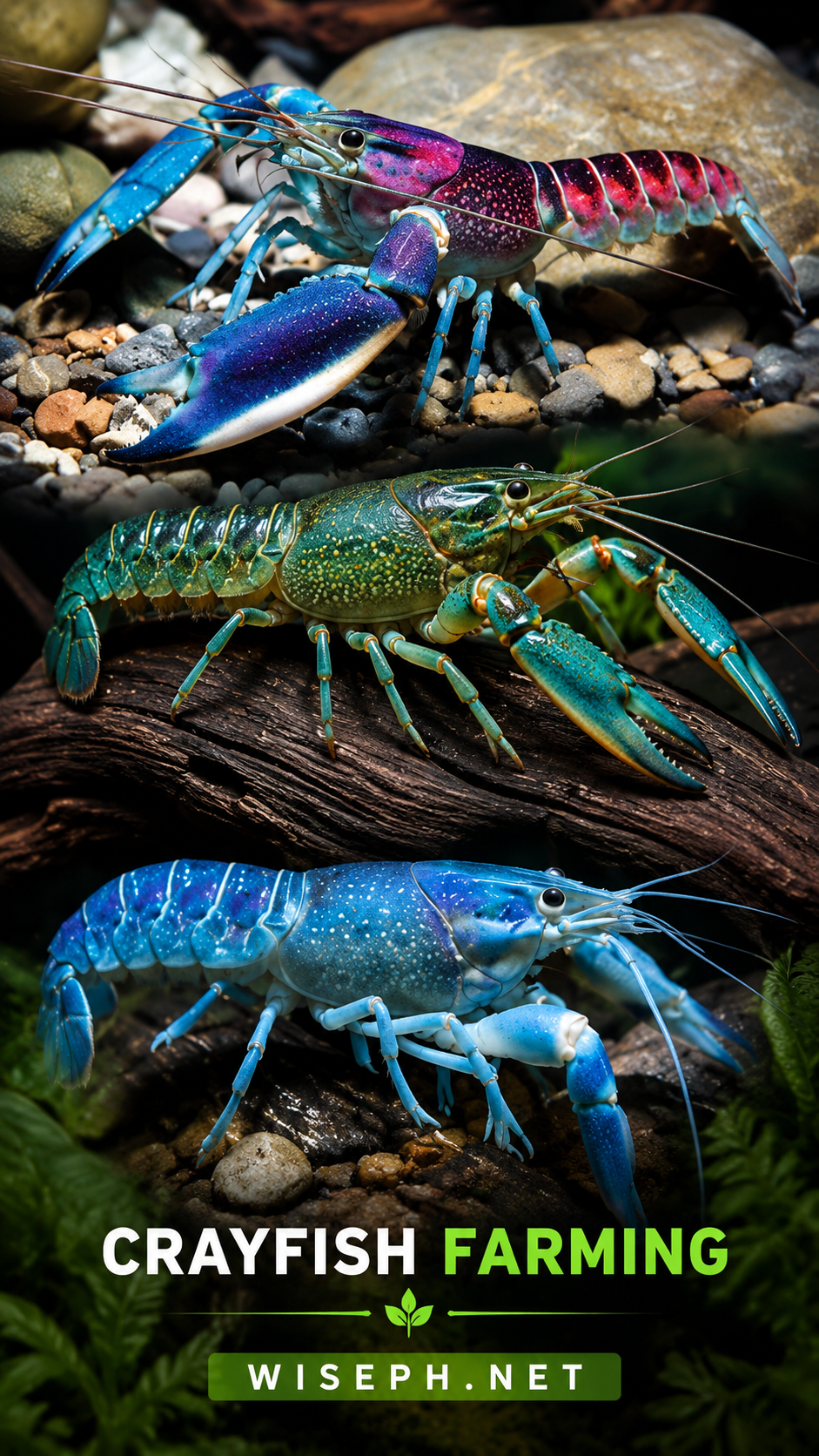
You don’t need a big fish farm or a large rice field. A 200-square-meter backyard pond, the right species, and seven to nine months of consistent management. That’s the entry point for crayfish farming in the Philippines.
The Australian Red Claw crayfish (Cherax quadricarinatus) sells at ₱2,500 to ₱3,500 per kilo at the farm gate. Restaurants pay premium for it as a local alternative to imported lobster. BFAR published the country’s first national farming guidelines in 2025. And the supply is still tiny compared to the demand from restaurants, resellers, and export buyers.
This guide covers species selection, setup costs, feeding strategies, water quality, realistic income projections, and how to close your first sale, based on what small-scale growers in Pampanga, Bulacan, and Nueva Ecija are actually doing in mid-2026.
What is crayfish farming, and why is it trending in the Philippines?
Crayfish farming is the commercial cultivation of freshwater crustaceans in ponds or tanks for food, live sale, or export. In the Philippines, it gained serious momentum in 2025 when BFAR published the first national guidelines and private investors launched the country’s largest crayfish nursery in Candaba, Pampanga.
Provincial farmers in Pampanga, Bulacan, and Nueva Ecija are already making the shift away from rice and vegetables. Not because crayfish farming is trendy. Rather, it’s because the margins are real and the land requirement is low.
You can run a productive farm on a backyard plot or a converted fishpond. Compare that to other high-value crops like agarwood farming, which takes years before your first harvest. Red Claw gives you a return in under a year. That speed matters a lot for OFWs investing back home and for provincial farmers managing tight cash flow.
Which species should you farm? Why Red Claw wins
The Australian Red Claw crayfish (Cherax quadricarinatus) is the only species to raise for commercial farming in the Philippines right now. BFAR endorsed it because it grows fast in Philippine freshwater, reaches up to 400 grams, and handles tropical temperatures of 25 to 30°C well.
| Feature | Red Claw (ARC) | Other species |
|---|---|---|
| Growth rate | 6 to 9 months to 80 to 150g+ | Slower or smaller |
| Climate fit | Excellent (25 to 30°C) | Varies |
| Government support | BFAR-regulated, active pilot projects | None |
| Market acceptance | High (restaurants, export) | Limited |
| Stock availability | BFAR-certified hatcheries | Ornamental or hobbyist only |
Other crayfish species exist in the Philippines, mostly in the ornamental and hobbyist trade. For grow-out with actual buyers and government backing, however, Red Claw is the only option with a working legal framework and a real supply chain behind it.
How much does it cost to start a crayfish farm in your backyard?
A small crayfish farm on 200 to 500 sqm costs ₱150,000 to ₱300,000 to set up. That covers pond construction, basic equipment, your first batch of juveniles, and feed for the first two to three months.
| Cost item | Estimated cost |
|---|---|
| Pond construction (liner, excavation, shelters) | ₱40,000 to ₱80,000 |
| Equipment (aerator, pump, nets, water test kit) | ₱15,000 to ₱30,000 |
| Initial stock (juveniles or small breeders) | ₱40,000 to ₱80,000 |
| Feed for first 2 to 3 months | ₱10,000 to ₱20,000 |
| Miscellaneous (nets, predator covers, tools) | ₱10,000 to ₱20,000 |
| Total | ₱150,000 to ₱300,000 |
Most beginners in Pampanga and Bulacan already own the land, so you’re really paying for the pond, aeration system, and stock. The trapal (plastic pond liner) setup is the most popular starting point because it costs far less than concrete tanks and works well for a first farm.
Some farmers start even smaller: two or three collapsible trapal ponds at ₱50,000 to ₱80,000 total, just to learn the system before committing to a full build. That’s a perfectly reasonable approach.
Stock quality matters more than almost anything else at this stage. Specifically, source your juveniles from BFAR-certified hatcheries or the Candaba nursery in Pampanga. Cheap, unverified stock is one of the most common reasons first farms fail.
What do crayfish eat? Cheap local feeds that actually work
Red Claw are omnivores. They eat plant matter, small animals, microbes, and organic debris. On a small farm, you combine commercial sinking pellets with cheap local supplements. The goal is to keep feed at 30 to 50 percent of total input costs, not higher.
| Feed type | Local examples | Cost level |
|---|---|---|
| Plant-based | Kangkong, cassava leaves, banana stems, duckweed, azolla | Very low |
| Protein boosters | Golden snails (kuhol), earthworms, trash fish | Low |
| Kitchen and agri waste | Vegetable scraps, rice bran, fruit peels (blanch first) | Free or cheap |
| Commercial pellets | Sinking shrimp or tilapia pellets (Lazada, Shopee) | Medium |
| Natural pond food | Plankton bloom, biofilm on shelters | Free |
Most successful small farms run a 60 to 70 percent local feed and 30 to 40 percent commercial pellets ratio. As a result, feed costs drop by up to half compared to pellets-only feeding, while growth rates stay solid.
Feed at 5 to 7 PM when crayfish are most active. Give only what they can finish in two to four hours, then remove uneaten food the next morning. Leftover feed decomposes fast in warm Philippine water and spikes ammonia. Ammonia kills faster than almost anything else in the pond.
How to protect your first crop: water quality, shelters, and the 30-day rule
Crayfish farming looks simple from Facebook posts and YouTube videos. On the ground, the hard part is not feeding or pond construction. It’s keeping survival rates above 60 percent in the first 30 days, and most beginners underestimate how much that takes.
In particular, the pattern of early losses from small growers across Pampanga, Bulacan, and Nueva Ecija is almost always the same four things.
The four biggest killers of first harvests
Water quality is the top killer by far. Low dissolved oxygen, ammonia buildup from overfeeding, and sudden pH swings stress crayfish and trigger mass die-offs, especially during molting. Keep pH between 7.0 and 8.5, dissolved oxygen above 5 ppm, and temperature between 25 and 30°C.
Not enough hiding shelters. Red Claw are cannibalistic during molting when they enter the soft shell stage. Without enough PVC pipes, bamboo sections, hollow blocks, or stacked tires, bigger crayfish eat the smaller ones. Many beginners lose 50 percent or more of their stock in the first months from this alone. Fill your pond with shelters before you stock a single crayfish.
Overstocking. Start at 2 to 3 crayfish per square meter, not 8 to 15. Higher density means more fighting, faster water pollution, and disease spread. For a 200 sqm pond, that’s 400 to 600 pieces. For 500 sqm, around 1,000 to 1,500 pieces.
Bad acclimation. Dumping new juveniles straight into your pond without mixing water parameters first shocks them and causes mass die-offs within days. Float the bag for 30 to 60 minutes, then slowly add pond water into the bag over one to two hours before releasing.
Your first 30-day checklist
- Float the stock bag for 30 to 60 minutes, then gradually mix pond water in over 1 to 2 hours before releasing
- Run aeration from day one (dissolved oxygen above 5 ppm at all times)
- Install all shelters before stocking (one hiding spot for every 2 to 3 crayfish)
- Test water parameters every 2 to 3 days (pH, ammonia, dissolved oxygen)
- Feed at dusk only and remove any uneaten food within 2 to 4 hours
- Change 20 to 30 percent of the water every one to two weeks
Get this right and your survival rate jumps from 40 to 50 percent up to 80 percent or higher. As one Pampanga farmer put it: “Nakalusot ako nung naintindihan ko na yung tubig at ang shelter.” The ones who failed almost always skipped these basics.
How much can you realistically earn from a 300 to 500 sqm pond?
A well-managed 300 sqm backyard pond can net ₱50,000 to ₱120,000 after the first full harvest. A 500 sqm pond can push ₱80,000 to ₱200,000 net, assuming ₱3,000 per kilo average price and around 70 percent survival rate.
| Pond size | Stocked | Harvested (70%) | Yield (kg) | Gross revenue | Cycle expenses | Net profit |
|---|---|---|---|---|---|---|
| 200 sqm | 400 to 600 pcs | 280 to 420 pcs | 25 to 45 kg | ₱75,000 to ₱135,000 | ₱40,000 to ₱60,000 | ₱30,000 to ₱80,000 |
| 500 sqm | 1,000 to 1,500 pcs | 700 to 1,050 pcs | 60 to 110 kg | ₱180,000 to ₱330,000 | ₱80,000 to ₱120,000 | ₱80,000 to ₱200,000 |
Cycle expenses include stock, feed, electricity for aeration, and maintenance. Pond construction is a one-time startup cost not included here.
Most first-time farmers land in the middle or lower end of these ranges because of the learning curve. That’s normal and expected. After the first harvest, moreover, you can keep your own breeders and produce juveniles in-house, which cuts your biggest recurring cost dramatically. Most farmers report doubling or tripling net profit on the second cycle.
Larger operations at 0.25 hectares (2,500 sqm) are already reporting around 1,000 kg per crop and ₱100,000 to ₱150,000 net profit. Scaling from your starter pond makes sense once you’ve learned the system.
How to sell your crayfish: from Facebook groups to restaurant deals
The market is smaller than most people expect. For a first-time farmer, that’s actually an advantage.
Facebook groups first. Join “Crayfish Market Philippines” and “Australian Redclaw Crayfish Farming and Sales in the Philippines.” Post clear photos of your harvest with the size, weight, and price. Your first buyers are usually other farmers looking for breeders, resellers, or direct consumers who want to cook them at home. Many small farms in Bulacan and Pampanga closed their first deals within days of a simple post.
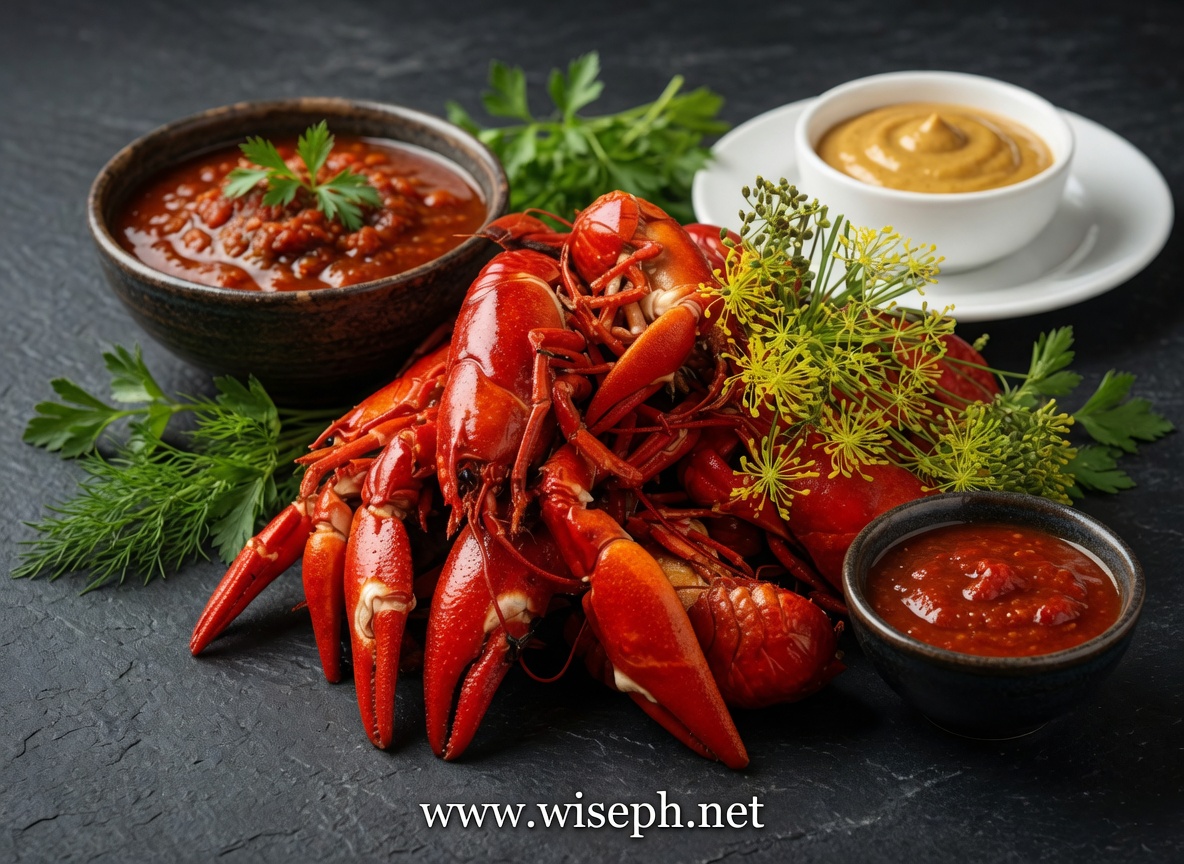
Restaurants next. High-end restaurants and seafood spots are the best long-term market. They use Red Claw as a local, affordable alternative to imported lobster for crayfish boils, grilled dishes, and buttered preparations. Visit or message nearby restaurants. Offer a small free sample batch of 5 to 10 kg so the chef can try it. Most chefs actively looking for local crayfish supply respond well to that approach.
For live transport, pack crayfish in styrofoam boxes with damp newspaper and gel ice packs, just not touching the crayfish directly. Keep the temperature around 15 to 20°C. Red Claw can survive 12 to 24 hours this way when done correctly. Many small farms in Central Luzon use Lalamove for short-haul deliveries.
Sell your very first batch cheaper, even below market rate. Get the photos. Get the testimonials. Build reputation fast. Once buyers trust your product, repeat orders come easily, and you push toward ₱3,000 to ₱3,500 per kilo.
How BFAR and DA support small-scale crayfish farmers right now
The Department of Agriculture is treating Red Claw as a priority emerging aquaculture species. The national guidelines are published, pilot projects are running, and the country’s first major crayfish nursery is operational in Candaba, Pampanga. The support is real, though still in the early phase.
- BFAR Administrative Circular No. 001, Series of 2025: the first national rulebook for Red Claw culture in the Philippines. Covers biosecurity, permits, pond design, stocking rules, and how to prevent escape into natural waterways. Following these rules helps you get buyer trust and opens access to formal financing later.
- Pilot projects in Nueva Ecija: In January 2026, BFAR stocked 14,000 craylings across four freshwater ponds in Muñoz, Nueva Ecija. The trial tests stocking densities of 10 and 15 per sqm over four to five months. Results will shape the next wave of farm rollouts nationwide.
- Free training and seminars: BFAR regional offices run free or low-cost orientations on pond setup, guidelines, and best practices. BFAR Region 3 ran a crayfish training in Bulacan in January 2026. Contact your nearest BFAR regional office to find the next one.
- Candaba nursery stock: the 1,280 sqm Candaba facility (largest in the country) produces quality craylings and broodstock. BFAR requires all commercial stock to come from certified hatcheries, which protects you from disease risk and keeps your product clean for buyers.
No widespread free fingerlings program exists yet for regular backyard farmers. Still, the technical assistance, training access, and priority sourcing from certified hatcheries are worth tapping now, especially for farmers in Central Luzon. Read the BFAR redclaw crayfish pilot announcement for the latest official update.
The opportunity most beginners are sleeping on
Right now, Philippine crayfish farming is still in the “pilot and nursery” phase. Most backyard farmers are watching and waiting.
That’s a mistake.
Farm Fresh Early Catch, backed by private investment and DA support, plans to roll out 1,500 hectares in Luzon and 750 hectares each in Visayas and Mindanao, projecting more than 1,200 tons of crayfish every six months starting this year. When that volume hits the market, prices will adjust downward. The premium window of ₱2,800 to ₱3,500 per kilo belongs to the farmers who get serious now.
Specifically, small 200 to 500 sqm backyard farms that nail the basics today can sell live at premium farm-gate prices to restaurants and Facebook market groups, produce juveniles and breeders for the expanding grow-out operations (often more profitable than grow-out in the next one to two years), and build direct buyer relationships before the market matures.
This is what getting into tilapia or bangus farming in the early days looked like. Margins were premium. Supply was short. The farmers who got serious early built businesses that survived the price correction. The ones who waited complained that the opportunity was gone.
If you’re ready to take the next step, explore more agri-business opportunities in the Philippines that fit the same model: low land requirement, high margins, and government-backed growth.
Frequently asked questions about crayfish farming in the Philippines
Is crayfish farming legal in the Philippines?
Yes. BFAR Administrative Circular No. 001, Series of 2025 sets the official rules for Australian Redclaw Crayfish farming in the Philippines. You need to register your farm, source stock from BFAR-certified hatcheries, and follow biosecurity requirements to operate legally.
How long before I can harvest my crayfish?
Red Claw crayfish take 6 to 9 months to reach marketable size of 80 to 150 grams or more. Your exact timeline depends on water quality, feeding consistency, and stocking density.
Where can I buy quality Red Claw crayfish fingerlings in the Philippines?
Source from BFAR-certified hatcheries or the Candaba nursery in Pampanga operated by Farm Fresh Early Catch. BFAR requires all commercial stock to come from certified local hatcheries to protect biosecurity. Avoid buying from unverified Facebook sellers. Low-quality stock is one of the most common reasons first farms fail.
Can I raise crayfish in a trapal (tarpaulin) pond?
Yes. Trapal or plastic pond liner setups are the most popular starting point for small-scale crayfish farms in the Philippines. They cost far less than concrete tanks and work well for beginner setups on 200 to 500 sqm of land.
What is the farm-gate price of Red Claw crayfish in the Philippines in 2026?
As of mid-2026, farm-gate prices range from ₱2,500 to ₱3,500 per kilo for harvest-size Red Claw crayfish of 80 to 150 grams. Export-quality or larger specimens can go higher. Prices are premium right now because supply is limited, but may adjust as large-scale operations ramp up.
Start small, but start now
Crayfish farming is not a get-rich-quick scheme. It takes 7 to 9 months, real capital of ₱150,000 to ₱300,000 for a starter setup, and consistent water management every week. But for a provincial farmer, an OFW investing back home, or a young entrepreneur with family land. The numbers work.
The supply is still short. Prices are still premium. The government is also backing it with pilot programs, hatcheries, and official guidelines. Start small, learn fast, and build your buyer network before the big players flood the market.