


I used the old Konsulta package for a basic check-up in 2024. The consultation went fine, but finding an active provider and figuring out which medicines were actually free took more time than it should have. That program no longer exists under that name.
PhilHealth rebranded Konsulta as YAKAP in July 2025, and the expanded version is meaningfully different. Medicine coverage jumped from roughly 21 drugs to 75. PhilHealth added cancer screening tests for the first time. The P20,000 annual medicine budget is a specific number now, not a vague “selected medicines” list.
If you’ve been putting off registering because you weren’t sure what the Konsulta package actually covered, the current YAKAP version is worth understanding properly. This guide covers what it covers, who qualifies, how to register, how to find a good provider, and what happens when you need care beyond what YAKAP handles.
What is PhilHealth YAKAP and what happened to Konsulta?
YAKAP stands for Yaman ng Kalusugan Program. PhilHealth launched it in July 2025 as the official replacement for Konsulta (Konsultasyong Sulit at Tama). The core concept is the same: PhilHealth pays accredited clinics to deliver primary care to registered members at no out-of-pocket cost. What changed is the scale and structure of the coverage.
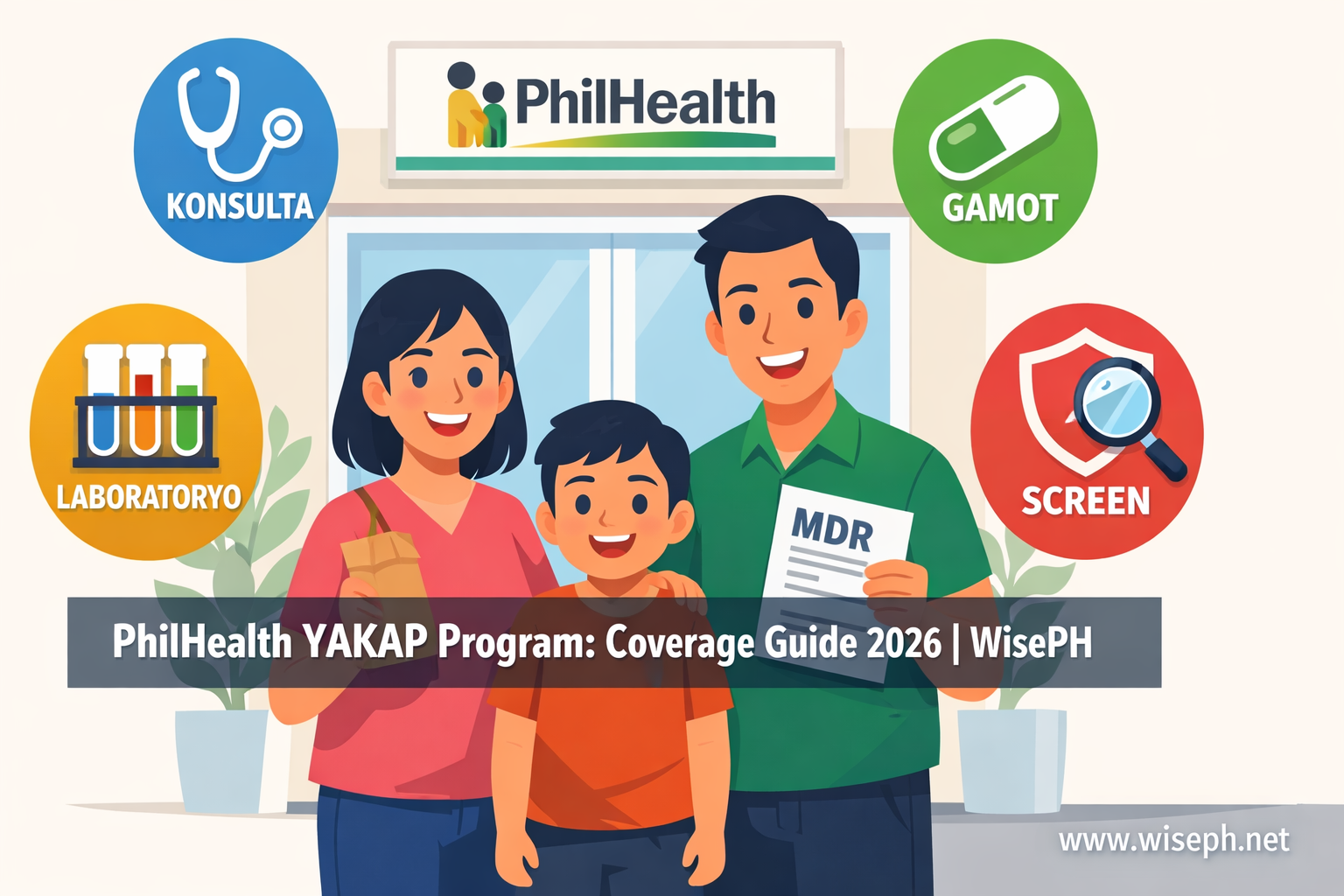
Konsulta was a single benefit with a limited medicine list. YAKAP reorganizes the package into four named components, each with a broader scope than what Konsulta offered.
| Component | What it covers |
|---|---|
| KONSULTA | Free primary care consultations and health risk assessments |
| GAMOT | 75 essential medicines, up to P20,000 per beneficiary per year |
| LABORATORYO | 13 outpatient laboratory and diagnostic tests |
| SCREEN | 6 cancer screening tests (new under YAKAP, not in old Konsulta) |
If you had an active Konsulta registration before July 2025, PhilHealth transitioned your record to YAKAP automatically. You do not need to re-register from scratch.
What does YAKAP actually cover?
All covered services are free at the point of care at accredited YAKAP clinics. There is no co-payment for services within the package. What you pay for are services and medicines outside the covered list.
GAMOT: 75 essential medicines
Each beneficiary gets up to P20,000 worth of medicines per year, dispensed from PhilHealth-accredited pharmacies. The 75 covered medicines span common conditions: antibiotics (including amoxicillin and co-amoxiclav), diabetes medications (metformin), blood pressure drugs (amlodipine, losartan), anti-asthma (salbutamol), cholesterol management (simvastatin), fever reducers (paracetamol), and treatments for common infections.
Medicines not on the 75-drug list are not part of the GAMOT benefit. The attending physician at your YAKAP clinic prescribes from the covered list based on your diagnosis. You cannot request a specific medicine from the list if it isn’t clinically indicated for your case.
LABORATORYO: 13 outpatient lab tests
Your YAKAP provider orders the 13 tests based on clinical need, not on request. They cover the most common screening and monitoring tests for chronic and infectious conditions.
- Complete Blood Count (CBC)
- Urinalysis
- Fecalysis
- Lipid Profile
- Fasting Blood Sugar (FBS)
- Oral Glucose Tolerance Test
- HbA1c
- Creatinine
- Electrocardiogram (ECG)
- Chest X-ray
- Pap Smear
- Sputum Microscopy
- Fecal Occult Blood
SCREEN: 6 cancer screening tests
This component is completely new. The old Konsulta package did not include cancer screening. YAKAP added 6 cancer screening tests, which your YAKAP provider recommends based on your age, sex, and health risk profile. This is one of the most significant upgrades from the old package, especially for members over 40.
Who is eligible for YAKAP?
All registered PhilHealth members qualify: employed, self-employed, OFW, senior citizens, indigents, sponsored members, and lifetime members. Qualified dependents (legal spouse who is not a PhilHealth member, unmarried children below 21, children over 21 with permanent disability, and qualified parents) are also covered, as long as they are officially declared in your PhilHealth MDR.
Freelancers and self-employed members have the same access as employed workers, but no HR office is managing the account on their behalf. Before registering, confirm that your membership category is correctly tagged as self-earning individual or self-employed, and that contributions are reflected properly. A lot of freelancers assume YAKAP works like a company HMO benefit and think they’re excluded. They’re not. PhilHealth designed YAKAP for the full range of members, including voluntary and self-paying contributors. For a full breakdown of rules by member type, see PhilHealth rules for self-employed, voluntary, and senior members.
One step many members skip: dependents must be officially listed in your PhilHealth MDR before they can use YAKAP. If your spouse, child, or parent is not yet in the system, update your records first. The process for downloading and verifying your current MDR is covered in the guide on how to download your PhilHealth MDR. For details on exactly who qualifies as a dependent under PhilHealth rules, the guide on qualified PhilHealth dependents has the full breakdown.
How to register for YAKAP
There are two paths: online through the PhilHealth Member Portal, or on-site at an accredited YAKAP clinic. Both lead to the same outcome. You need a portal account before using the online option. If you haven’t registered one yet, the PhilHealth online registration guide covers that first.
Option 1: Online via PhilHealth Member Portal
Log in at memberinquiry.philhealth.gov.ph/member. Look for the Konsulta or YAKAP module within the portal. Select your province and municipality, then choose an available accredited provider from the list. Not all providers will show open slots, as registration is tied to the clinic’s catchment population limit.
Once registration is confirmed, your assigned provider appears in your Member Information section. Keep your MDR information updated before registering, as mismatched details can cause problems during the process.
Option 2: On-site at a YAKAP clinic (First Patient Encounter)
You can also register directly at an accredited YAKAP clinic during your first visit. This is called the First Patient Encounter (FPE). The clinic staff will complete PhilHealth identity verification and ask you to sign a YAKAP Empanelment Slip, which formally registers you to that provider.
For members without internet access or those who prefer in-person help, PhilHealth also allows assisted registration through Local Health Insurance Offices (LHIOs), PhilHealth CARES staff, and partner LGUs. Ask at your nearest PhilHealth office if you need help locating an LHIO near you.
How to find an accredited YAKAP provider near you
PhilHealth publishes a PDF list of accredited Konsulta and YAKAP providers nationwide, updated periodically on philhealth.gov.ph. You can also search by province and municipality through the Member Portal when registering. The list covers Rural Health Units (RHUs), city health centers, private medical clinics, ambulatory centers, and outpatient departments of hospitals.
Here’s the practical reality: being on the accredited list and actively accepting new registrations are two different things. Some clinics already hit their population limit and won’t show open slots on the portal. Others are technically accredited but haven’t fully set up their YAKAP processes yet.
What helped me more than the official list was calling the clinic directly before going. Ask specifically: are you currently accepting new YAKAP registrations, what lab tests do you perform on-site, and which medicines from the GAMOT list are available at your clinic pharmacy. A smaller barangay health center may be accredited but have far fewer medicines and labs on hand compared to a larger medical center. The goal is finding a provider that is both accepting new members and has the services you’re likely to need.
Can you switch YAKAP providers?
Yes, but there is a specific window for it. Under PhilHealth Advisory No. 2024-0058, members can request a transfer to a different YAKAP provider during the fourth quarter of the year, from October 1 to December 31. Approved transfers take effect on January 1 of the following year.
To transfer, submit the PhilHealth Konsulta Registration Form (PKRF) to the nearest PhilHealth Local Health Insurance Office (LHIO). There is no direct “change provider” button inside the Member Portal at this time. The portal is primarily for viewing your current registration status, not editing it.
This is the part many members discover too late. If you registered with a clinic that turned out to have limited services or is now far from where you live, you have to wait until Q4 to make the switch. Check the clinic’s actual services and location before confirming registration the first time.
What YAKAP does not cover and what happens next
YAKAP is a primary care package. It is not a replacement for full health insurance or inpatient coverage. Specialist consultations, surgery, CT scans, MRI, advanced procedures, and hospital confinement are not part of YAKAP. Basic preventive dental is an exception; PhilHealth added a ₱1,000 annual dental benefit per member through a separate circular. For the full breakdown, read the YAKAP dental coverage guide.
That does not mean you pay everything out of pocket. If your condition requires higher-level care, your YAKAP provider issues a referral. Depending on the diagnosis and facility, PhilHealth may still cover part of the treatment under a separate benefit package, such as inpatient case rates, Z Benefits, or the Select Diagnostic Procedures (SDP) benefit.
The gap people run into is assuming that a free Konsulta or YAKAP consultation means all follow-up care is also free. It isn’t. Branded medicines, specialist fees, private room charges, and procedures outside the covered package can still result in out-of-pocket costs after the referral. If you end up admitted to a hospital, see the guide on what documents you need to file a PhilHealth claim for what to prepare at the billing office.
Frequently asked questions
Is PhilHealth YAKAP the same as Konsulta?
YAKAP (Yaman ng Kalusugan Program) is the official replacement for Konsulta, launched in July 2025. The core concept is the same but YAKAP expanded coverage to four components: free consultations, 75 essential medicines up to P20,000 per year, 13 lab tests, and 6 cancer screenings. Members previously enrolled in Konsulta were transitioned to YAKAP automatically.
How much is the YAKAP medicine benefit per year?
Each beneficiary gets up to P20,000 worth of essential medicines per year under the GAMOT component. Your YAKAP provider prescribes from the covered list, and you collect them from PhilHealth-accredited pharmacies. Only medicines on the 75-drug covered list qualify.
Can my spouse and children use YAKAP with my PhilHealth?
Yes. Qualified dependents are covered under YAKAP, including your legal spouse, unmarried children below 21, children over 21 with permanent disability, and qualified parents. They must be officially declared in your PhilHealth MDR first. Dependents not yet listed in the MDR need to be added before they can use YAKAP.
Can self-employed members and freelancers register for YAKAP?
Yes. YAKAP is available to all registered PhilHealth members, including freelancers, online sellers, and gig workers. The registration process is the same as for employed members. Before registering, confirm that your membership category is correctly tagged and that your contributions are reflected in your account.
What happens if I need specialist care after a YAKAP consultation?
Your YAKAP provider issues a referral to a specialist or higher-level facility. YAKAP covers primary care only. Specialist consultations, hospitalization, surgery, and advanced diagnostics like CT scans are not part of the package. However, those services may still be partly covered under a separate PhilHealth benefit package, such as inpatient case rates or Z Benefits.
Browse the complete PhilHealth guides on WisePH for more step-by-step walkthroughs on contributions, claims, eligibility, and benefits.
Once your PhilHealth benefits are sorted, a practical next step for long-term savings is the Pag-IBIG MP2 savings account, which earns tax-free dividends and is open to any Pag-IBIG member, including self-employed contributors.