


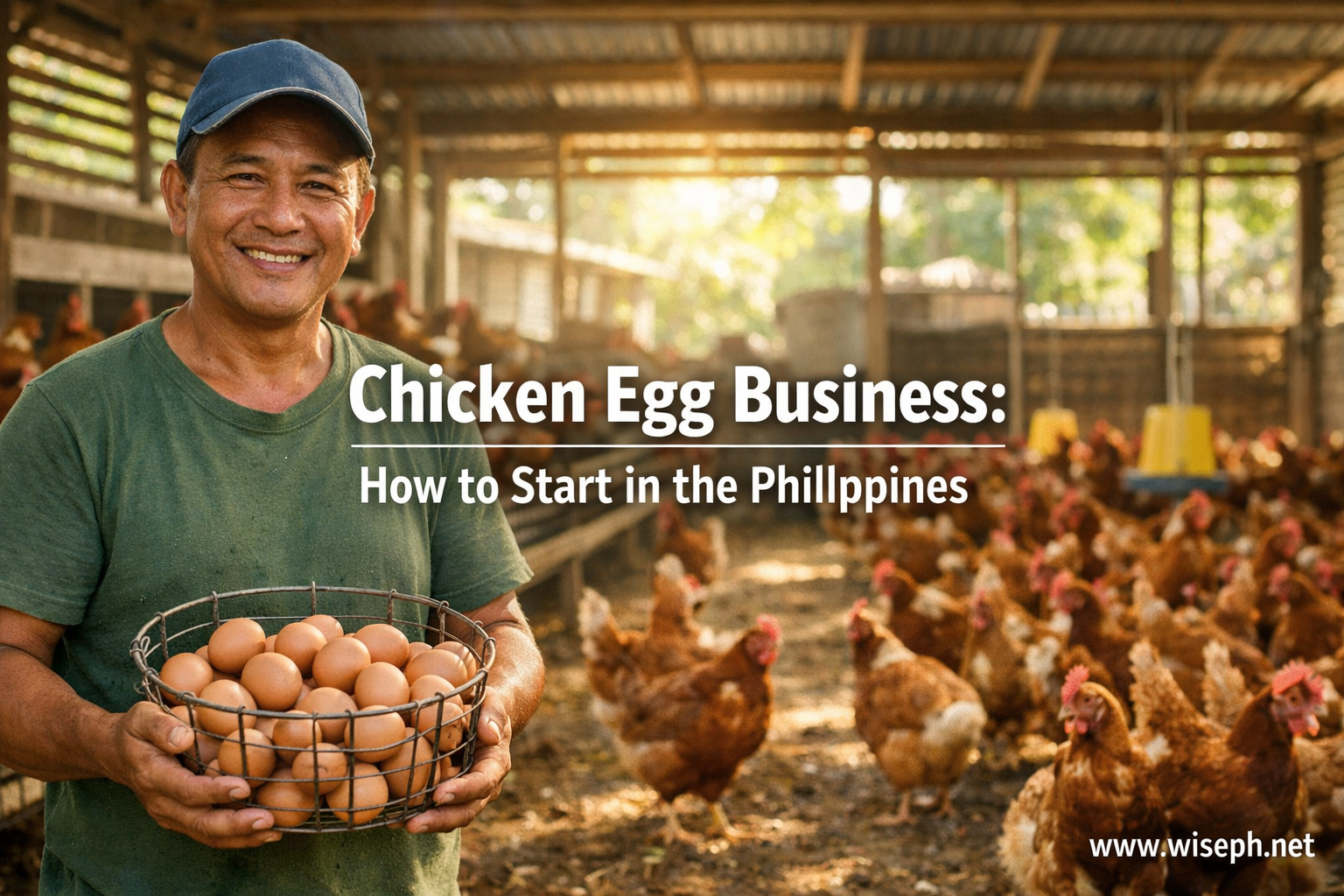
Every morning, a healthy flock of 50 laying hens produces 37 to 45 eggs. That is income before 7 a.m. Egg farming is one of the few agri-businesses in the Philippines where daily revenue is predictable once production stabilizes.
But most beginners fail in the first few months, not because the hens stopped laying, but because they ran out of operating cash or made setup mistakes that compounded fast. This guide covers what actually works, with real numbers.
Is egg farming a good business in the Philippines?
Yes, but only if you treat it as a real business. Egg demand in the Philippines is year-round and consistent. Eggs are a daily staple across all income brackets, from tapsilog breakfasts to school canteen menus. A small flock of 50 to 100 commercial layers can generate steady daily income once birds hit peak production.
The risk, however, is not in the market. It is in cash flow management, feed costs, and disease control. Farmers who succeed long-term approach egg farming the same way they would any small business: with a budget, a market plan, and a contingency reserve.
For more agri-business ideas in the Philippines, browse the WisePH agri-business section for practical guides on what actually works.
Which breed is best for egg production?
For consistent volume, ISA Brown and Hy-Line Brown outperform native chickens by a wide margin. Both commercial breeds reach laying age around 18 to 20 weeks and sustain lay rates of 80 to 90 percent on quality layer feed. Native hens, in contrast, take longer to mature and produce significantly fewer eggs per day.
I started with native chickens because they were easier to manage and more resistant to local diseases. The feed savings made sense at first. Once I switched to ISA Brown, however, daily output jumped noticeably within the first month. For a beginner focused on profitability, commercial layers are the faster route.
| Breed | Lay rate | Time to first egg | Best for |
|---|---|---|---|
| ISA Brown | 80–90% | 18–20 weeks | Commercial production |
| Hy-Line Brown | 80–88% | 18–20 weeks | Commercial production |
| Native (Darag, etc.) | 40–60% | 24+ weeks | Backyard, premium free-range market |
How much does it cost to start a chicken egg business?
For 50 layers, budget ₱35,000 to ₱55,000. For 100 layers, plan ₱65,000 to ₱100,000. These numbers cover pullets, the first month of layer mash, basic housing, and feeders. They do not include a cash buffer, which you absolutely need.
A recent Philippine government procurement bid priced ready-to-lay pullets at around ₱420 per head. Layer mash from a Cebu supplier was listed at ₱1,840 to ₱1,870 per 50 kg bag. At 110 to 120 grams per bird per day, feed cost runs roughly ₱4.05 to ₱4.23 per hen daily.
| Expense | 50 layers | 100 layers |
|---|---|---|
| Ready-to-lay pullets (₱420/head) | ₱21,000 | ₱42,000 |
| Feed, first month | ₱6,100–₱6,700 | ₱12,100–₱13,500 |
| Housing, nesting, feeders/drinkers | ₱5,000–₱15,000 | ₱8,000–₱25,000 |
| Vitamins, medicines, egg trays | ₱2,000–₱5,000 | ₱3,000–₱8,000 |
| Total estimate | ₱35,000–₱55,000 | ₱65,000–₱100,000 |
As a result, feed is the expense most beginners underestimate. With the rising cost of feeds and fuel affecting farm input prices, it pays to check current market prices before locking in your budget.
How to set up your egg farm step by step
Step 1: Choose your site and housing
Laying hens need shade, ventilation, and protection from predators and rain. Heat stress cuts egg output. A simple covered shelter with nesting boxes and perches works fine for a backyard setup. Avoid low-lying areas that flood during rainy season.
Step 2: Source vaccinated, ready-to-lay pullets
Ideally, buy pullets at 16 to 18 weeks from a reputable breeder. Confirm the birds have been vaccinated against Newcastle disease and infectious bronchitis. Skipping this check is one of the most common and costliest beginner mistakes.
Step 3: Set up constant feed and water access
Laying hens must have layer mash and clean water available at all times. Specifically, do not substitute grower feed or all-purpose feed during the laying stage. The calcium and protein levels in layer mash are calibrated specifically for egg formation.
Step 4: Register and track from day one
Register your business with your LGU and DTI if you plan to sell commercially. Moreover, keep a daily log of eggs collected, feed consumed, and any bird losses. Once the farm is earning, you will need to file taxes as a sole proprietor. The 2026 BIR 1701A guide covers annual ITR filing for self-employed individuals.
Step 5: Lock in buyers before your first eggs
First, know your market before production starts. Direct sales to neighbors, sari-sari stores, and wet market vendors are the most accessible channels. Free-range and native eggs can sell at a premium, but you will need to educate buyers on why the price is higher than supermarket eggs.
How much can you realistically earn from egg farming?
With 50 healthy ISA Brown layers at an 80 percent lay rate, expect about 40 eggs per day. At ₱8 to ₱10 per egg for commercial grade, that is ₱320 to ₱400 gross daily. Monthly gross runs roughly ₱9,600 to ₱12,000.
After subtracting feed (₱6,100 to ₱6,700/month), vitamins, trays, and minor expenses, net monthly income for a 50-layer flock sits around ₱2,000 to ₱5,000. It is not life-changing on its own. But it is consistent, and it scales.
| Flock size | Daily eggs (80% rate) | Daily gross (₱9/egg) | Monthly gross | Approx. net |
|---|---|---|---|---|
| 50 layers | 40 eggs | ₱360 | ₱10,800 | ₱2,000–₱5,000 |
| 100 layers | 80 eggs | ₱720 | ₱21,600 | ₱6,000–₱10,000 |
Once you are generating steady monthly income, consider putting a portion into tax-free MP2 savings to grow your capital outside the farm. MP2 dividends are tax-free and compound annually.
Five mistakes that kill egg farming profits early
Most failed egg farms do not fail because the hens stopped laying. They fail because the operator ran out of cash or made avoidable setup mistakes.
1. Starting too big. Buying 200 pullets before you know how to manage 50 spreads your budget and your attention thin. Start small, learn the daily rhythm, then scale once production is stable.
2. Buying cheap feed. Low-quality layer mash cuts cost per bag but reduces daily output. A hen eating poor-quality feed lays less, wastes more, and weakens faster. The math almost always turns against you.
3. Skipping health management. Similarly, vaccination, deworming, and weekly sanitation are not optional extras. One Newcastle disease outbreak moves through a flock fast. Prevention costs far less than treatment, and treatment still may not save the flock.
4. No market plan. For example, producing 40 eggs daily means nothing if you are forced to unload them at ₱5 per piece to a middleman while your per-egg cost is ₱6. Know your buyers and your price floor before the first egg drops.
5. Computing income at 100 percent lay rate. In addition, breakage, molting, heat stress, and early culling are real. Most beginners calculate ideal output and budget accordingly. Real farm numbers are always lower. That gap is where most first-year farms lose money.
What government support is available for egg farmers?
Several programs exist. The key is knowing which ones you qualify for and what they actually fund.
ATI (Agricultural Training Institute) runs chicken layer production trainings covering breed selection, housing, feed management, biosecurity, disease control, and record-keeping. Therefore, complete this before you spend a peso on birds.
For financing, the ACPC Agri-Negosyo Loan Program funds capital requirements for individual farmers and agri MSEs. LANDBANK’s Poultry and Livestock Value Chain Lending Program can cover up to 80 percent of project cost, rising to 90 percent for agri graduates or trained poultry farmers. DA-SAAD provides livelihood support including poultry projects in covered provinces. PCIC offers poultry insurance to protect your flock once you have stock in place.
| Program | What it funds | Who qualifies |
|---|---|---|
| ATI Layer Training | Technical skills | Open to all farmers |
| ACPC Agri-Negosyo Loan | Capital, inputs | RSBSA-registered farmers |
| LANDBANK Poultry Lending | Up to 80–90% of project cost | Small farmers, agri graduates |
| DA-SAAD | Livelihood support, training | Covered provinces |
| PCIC Poultry Insurance | Flock protection | Active poultry operators |
As a self-employed egg farmer, keep your SSS contributions active. Benefits like sickness, disability, and retirement coverage matter more when your income depends entirely on your farm. Read more about why SSS coverage matters for self-employed workers.
Your first 30 days: what to get right
The first month determines whether your flock settles in or starts deteriorating. According to FAO poultry biosecurity guidelines, laying hens need constant access to clean food and water and must be kept in hygienic housing to control disease.
Isolate new birds immediately
USDA guidelines recommend isolating new, borrowed, or returning birds for at least 30 days. Furthermore, never mix newly purchased pullets with established birds. Cross-contamination in the first weeks is a leading cause of early flock losses.
Build the routine before problems start
Feed at the same times each day. Also, track daily feed consumption. A sudden drop in intake is usually the first sign something is wrong, well before you see sick or dead birds. Consistency here is your early warning system.
Monitor early egg production without overreacting
Your first eggs will come irregularly. Shell quality and size will vary in the first two to three weeks. This is normal. Nevertheless, watch for steady week-over-week improvement. If production plateaus or drops early, instead check water quality, feed freshness, and ventilation before assuming disease.
If you want to explore other low-capital farm businesses, the hito farming guide and crayfish farming guide are solid next reads.
FAQ
What is the best breed for egg farming in the Philippines?
ISA Brown and Hy-Line Brown are the top commercial choices. Both sustain 80 to 90 percent lay rates on quality layer mash. Native breeds produce fewer eggs but can command a premium price from buyers who prefer free-range products.
How much capital do I need to start?
A lean 50-layer setup runs ₱35,000 to ₱55,000, including pullets, one month of feed, and basic housing. Keep an additional ₱5,000 to ₱10,000 as a cash reserve for slow weeks and unexpected costs.
How long before hens start laying consistently?
Ready-to-lay pullets at 16 to 18 weeks begin producing within two to four weeks of arrival. Steady, consistent production typically stabilizes around five to six months of age.
Can I start egg farming in a small backyard?
Yes. A free-range backyard setup with 25 to 50 birds is a realistic entry point. I started with 25 native chickens in an open area with a night shelter. That was enough to learn the basics before scaling to commercial layers.
What is the biggest ongoing challenge in egg farming?
Feed cost. It is the largest recurring expense and the one most beginners underestimate. Controlling feed cost without compromising quality is the single biggest driver of whether your egg farm is profitable or just breaking even.
Start small. Feed well. Scale when ready.
Overall, egg farming rewards patience and discipline more than it rewards scale. Start with a flock you can manage, feed your birds well, and protect them from disease. The income builds slowly but consistently.
In short, my advice with ₱50,000: start with 30 to 50 quality layers, keep a feed reserve, and build your market before you need it. Biosecurity is non-negotiable from day one.