


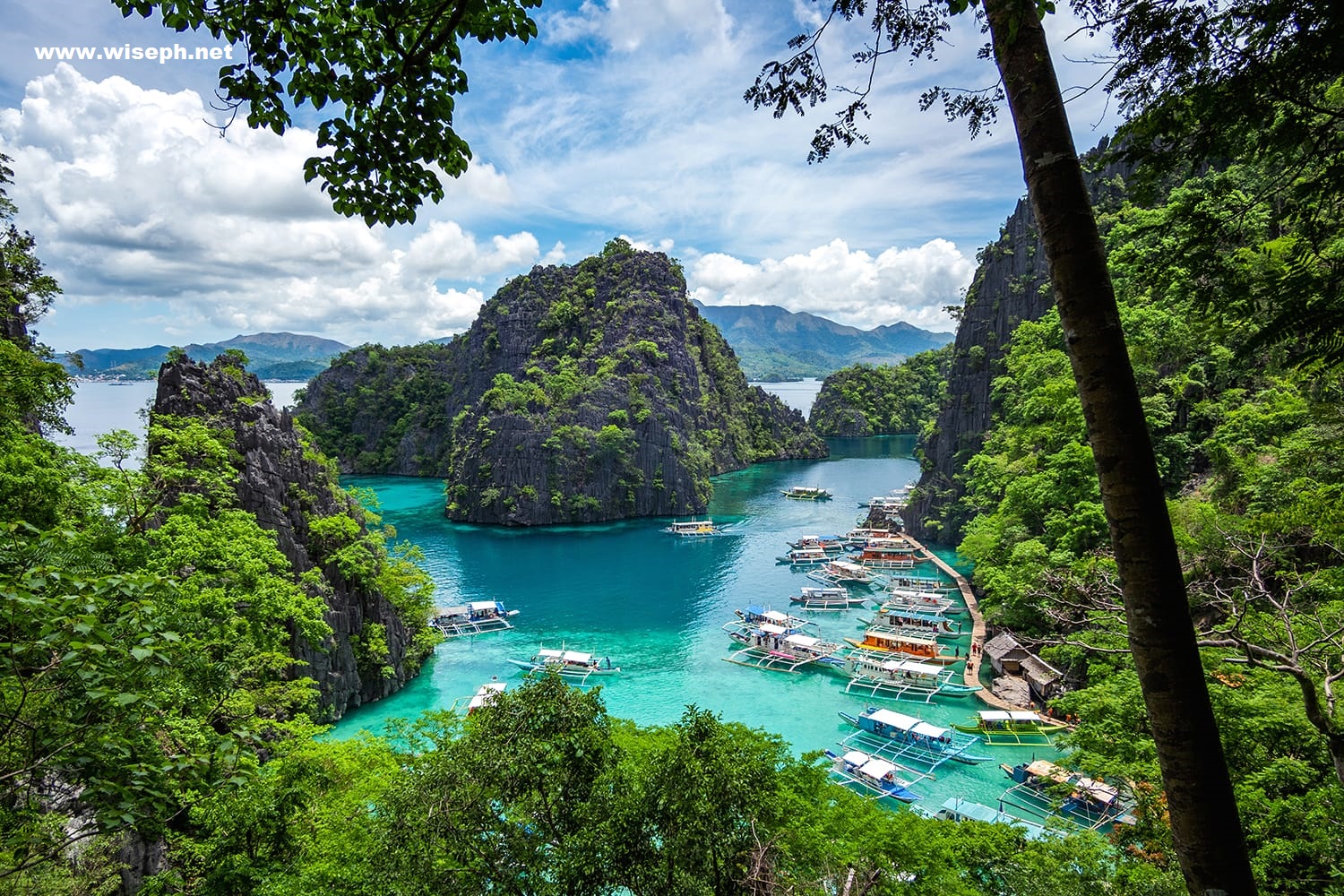
Palawan hasn’t sold out.
Most Philippine beach destinations have gone fully commercial. Palawan, especially El Nido, still feels spread out enough that even on a busy day, you can find a lagoon with almost nobody else in it. A friend who just got back said the limestone cliffs hit different in person. No drone footage prepares you for how tall and dramatic they actually are up close. In fact, the province covers three main areas, each with its own personality. You don’t have to pick just one.
| Destination | Best For | Ideal Trip Length |
|---|---|---|
| Puerto Princesa | UNESCO Underground River, city base | 1–2 days |
| El Nido | Lagoons, island hopping, secret beaches | 3–4 days |
| Coron | WWII shipwrecks, crystal-clear lakes | 3–4 days |
Still deciding between Palawan and other Philippines destinations? Our guide to the top travel destinations in the Philippines gives you the full country picture.
Best time to visit Palawan
November to May is your window. Skies are clear, seas are calm, and island-hopping tours almost never get cancelled during dry season.
However, avoid June through October. Rainy season brings frequent showers and rough open-sea conditions. As a result, July to September carries the highest risk of cancelled tours, sometimes with very little notice.
| Month | Conditions | Verdict |
|---|---|---|
| Nov – Feb | Dry, cool | Best time |
| Mar – May | Dry, slightly warmer | Great |
| Jun – Jul | Rains starting | Risky |
| Aug – Sep | Peak monsoon, rough seas | Avoid |
| Oct | Unpredictable | Hit or miss |
A friend who flew to Coron last February had a perfect trip. Zero cancelled tours. In contrast, another group’s entire August boat schedule got wiped out by rough weather. Those are real outcomes, not hypotheticals.
If you’re set on going off-season, download the PAGASA weather app and check it daily. Also, grab travel insurance. Tour refund policies vary wildly by operator, and some offer nothing at all.
How to get to Palawan
Each destination has its own airport, so this matters before you book.
Puerto Princesa is the main gateway. Cebu Pacific and Philippine Airlines fly direct from Manila in about 1 hour and 15 minutes. Budget roundtrip fares on promo season run ₱4,000–₱6,000.
El Nido (Lio Airport) has direct flights from Manila and Clark via Air Swift. These are more expensive at ₱4,000–₱8,000 one way, but they cut out the 5–6 hour van ride from Puerto Princesa entirely.
Similarly, Coron (Francisco B. Reyes Airport) is served by Cebu Pacific from Manila in about 1 hour. Promo fares go as low as ₱2,500 one way.
Doing the full route? Additionally, budget an extra ₱3,000–₱5,000 for inter-destination transfers. A ferry connects El Nido and Coron in about 4 hours. No extra flight needed for that leg.
How much does a Palawan trip actually cost?
Budget travelers can do 3–5 days in Palawan for ₱10,000–₱18,000 per person. That covers flights, accommodation, tours, food, and transfers. Here’s what real travelers spent in 2026:
| Expense | Coron (Budget) | El Nido (Budget) |
|---|---|---|
| Roundtrip flights | ₱4,000–₱6,000 | ₱3,500–₱7,000 |
| Accommodation (per night) | ₱1,200–₱1,800 | ₱800–₱2,000 |
| Island tours (2–3) | ₱3,000–₱3,400 | ₱2,400–₱4,000 |
| Food (per day) | ₱400–₱600 | ₱400–₱600 |
| Transfers + fees | ₱500–₱1,000 | ₱500–₱1,000 |
| Total (4 days) | ₱10,000–₱13,000 | ₱12,000–₱18,000 |
A friend who did Coron solo last December came in around ₱11,500. His only regret: not bringing a ₱2,000 buffer for extras like kayaking. Meanwhile, the El Nido figures come from travel vloggers doing budget recaps with actual receipts shown on camera.
Overall, flights are the biggest variable. Catch a Cebu Pacific or Philippine Airlines promo and the total drops significantly.
Puerto Princesa: the gateway you shouldn’t rush through
Most travelers treat Puerto Princesa as a layover. That’s a mistake.
It’s worth at least a full day. The food scene alone makes it worthwhile. Baker’s Hill’s crocodile sisig is worth trying. In the evenings, walking the waterfront is easy and far less overwhelming than anything near Manila.
The Puerto Princesa Underground River
The main draw is the Puerto Princesa Subterranean River National Park, a UNESCO World Heritage Site and one of the New Seven Wonders of Nature. Specifically, the river runs through an 8.2-kilometer cave system that you tour entirely by paddle boat.
Book well in advance. December to February slots fill up days ahead. The tour itself is about 45 minutes inside the cave. Furthermore, entry fees and permits run ₱580–₱800 per person depending on whether you book through an operator or the local government unit directly.
El Nido: where the postcards actually come to life
El Nido is Palawan’s island-hopping capital. The whole experience runs on four organized boat tours covering the lagoons, caves, and beaches of the Bacuit Archipelago. Tour A is the one everyone talks about. Big Lagoon, Small Lagoon, Secret Lagoon, Shimizu Island. Most vloggers call it the best single day you can have in the entire province.
Island hopping tours: the honest breakdown
| Tour | Highlights | Price Range |
|---|---|---|
| Tour A | Big Lagoon, Small Lagoon, Secret Lagoon | ₱1,200–₱1,500 |
| Tour B | Entalula Beach, Cathedral Cave, Snake Island | ₱1,200–₱1,500 |
| Tour C | Hidden Beach, Matinloc Shrine, Tapiutan Strait | ₱1,300–₱1,600 |
| Tour D | Cadlao Lagoon, Bukal Beach, Nat-Nat Beach | ₱1,200–₱1,500 |
Prices typically include lunch and snorkeling gear. For better rates, book through your guesthouse or at the town pier rather than online resellers.
What surprised me after watching those El Nido vlogs: even with multiple boats hitting the same spots, the lagoons are spread across hundreds of islands. As a result, it rarely feels crowded. Moreover, the limestone cliffs are far taller and more dramatic than any drone footage suggests. No photo does them justice.
If you’re comparing El Nido’s vibe with Boracay’s more resort-heavy strip, our Boracay beachside tour guide breaks down the difference in atmosphere and cost.
Coron: a living underwater museum
Coron is the most accessible wreck-diving experience in the world. In 1944, U.S. forces sank a Japanese supply fleet in Coron Bay. Those ships now sit 10–40 meters down, covered in corals and fish.
A friend showed me his snorkeling videos from inside one of the wreck interiors. His description: “It felt like a living underwater museum mixed with an adventure park.” Still the most accurate thing I’ve heard about it.
WWII wrecks and Kayangan Lake
You don’t need a diving certification. Many wrecks are shallow enough for snorkeling. However, if you are a certified diver, Coron ranks consistently among the top ten wreck-diving destinations in the world, alongside sites like the SS Thistlegorm in the Red Sea.
Beyond the wrecks, Kayangan Lake is non-negotiable. Often called the cleanest lake in Asia, with turquoise water and dramatic limestone formations above it. The hike to the viewing deck takes about 10–15 minutes. Worth every step.
Coron feels raw compared to El Nido. Less polished, more adventurous. That’s not a criticism. It’s the whole point.
Travel tips most Palawan blogs never tell you
Bring small-denomination bills. ₱20, ₱50, ₱100. Almost every tricycle driver, boat add-on, island entrance fee, and sari-sari store runs on cash only. Nobody has change for ₱500 or ₱1,000. A friend got stuck overpaying at a tour stop because he didn’t have the right bills. Break your money at an ATM or 7-Eleven on Day 1, not Day 3.
Prepare for the boat rides. Tour days in Coron can mean 2–4 hours of open-sea travel each way, even in dry season. The vlogs show the highlights, not the 3-hour haul. Bring motion-sickness tablets, ginger chews, and sit in the middle of the bangka where the rocking is less intense. This is the number one surprise for first-timers, and almost no standard blog warns them.
Similarly, book tours in advance. Peak season (December to February) fills fast, specifically for Underground River permits. Don’t show up expecting a same-day slot.
Finally, pack for conservation rules. Palawan bans single-use plastics in most protected areas. Reusable bottle, eco bag. Some operators will turn you away at the dock without them.
Looking for a completely different type of Philippines trip? Our Sagada mountain travel guide covers one of the country’s most underrated highland destinations. And if you’re building a longer itinerary, our top 10 Ilocos tourist spots is worth reading next.
Conservation rules and fees: what to expect
Palawan takes its environment more seriously than almost any other province in the Philippines. That’s the main reason it still looks the way it does.
Specifically, most protected areas charge environmental fees on top of tour prices. El Nido collects around ₱200 per tourist at the tourism office when you register. The Underground River charges a separate park fee of ₱580–₱800. Similarly, Coron has fees at Kayangan Lake and Twin Lagoon. As a result, budget ₱500–₱1,000 extra across your whole trip for these charges.
Some areas deliberately cap daily visitors. That’s not an inconvenience.
The Tubbataha Reef Natural Park, a second UNESCO World Heritage Site off Palawan’s coast, is one of the best-preserved coral reefs in Southeast Asia. Strict enforcement and visitor limits are a big part of why it still exists in that condition. The same conservation mindset applies to protected nature sites across the country, including Baey-Anito Falls in Ilocos Sur, where rules exist for exactly the same reason.
Frequently asked questions
Is Palawan safe for solo travelers?
Yes. Puerto Princesa, El Nido, and Coron are all safe for solo travel, including solo female travelers. Stick to organized tours, stay in well-reviewed guesthouses, and keep your belongings secured on boat trips.
Do I need to book everything in advance?
For peak season (December to February), yes. Book flights, Underground River permits, and at least one night’s accommodation before you arrive. Off-season gives more flexibility, but advance booking is still recommended for popular tours.
Can I visit all three destinations in one trip?
Yes, but budget 7–10 days for a comfortable Puerto Princesa to El Nido to Coron route. A ferry connects El Nido and Coron in about 4 hours. No extra flight needed for that leg.
How much are the environmental fees in Palawan?
El Nido charges around ₱200 per tourist. The Underground River is ₱580–₱800 depending on booking method. Set aside ₱500–₱1,000 extra for fees across your entire trip.
Is Palawan expensive compared to other Philippine destinations?
Moderate. More expensive than Ilocos or Sagada, but cheaper than Boracay for similar quality. Budget travelers can manage ₱10,000–₱13,000 for 4 days in Coron. Mid-range El Nido runs ₱15,000–₱20,000.
Ready to plan your Palawan trip? Browse more Philippines travel guides on our travel and tourism blog.