


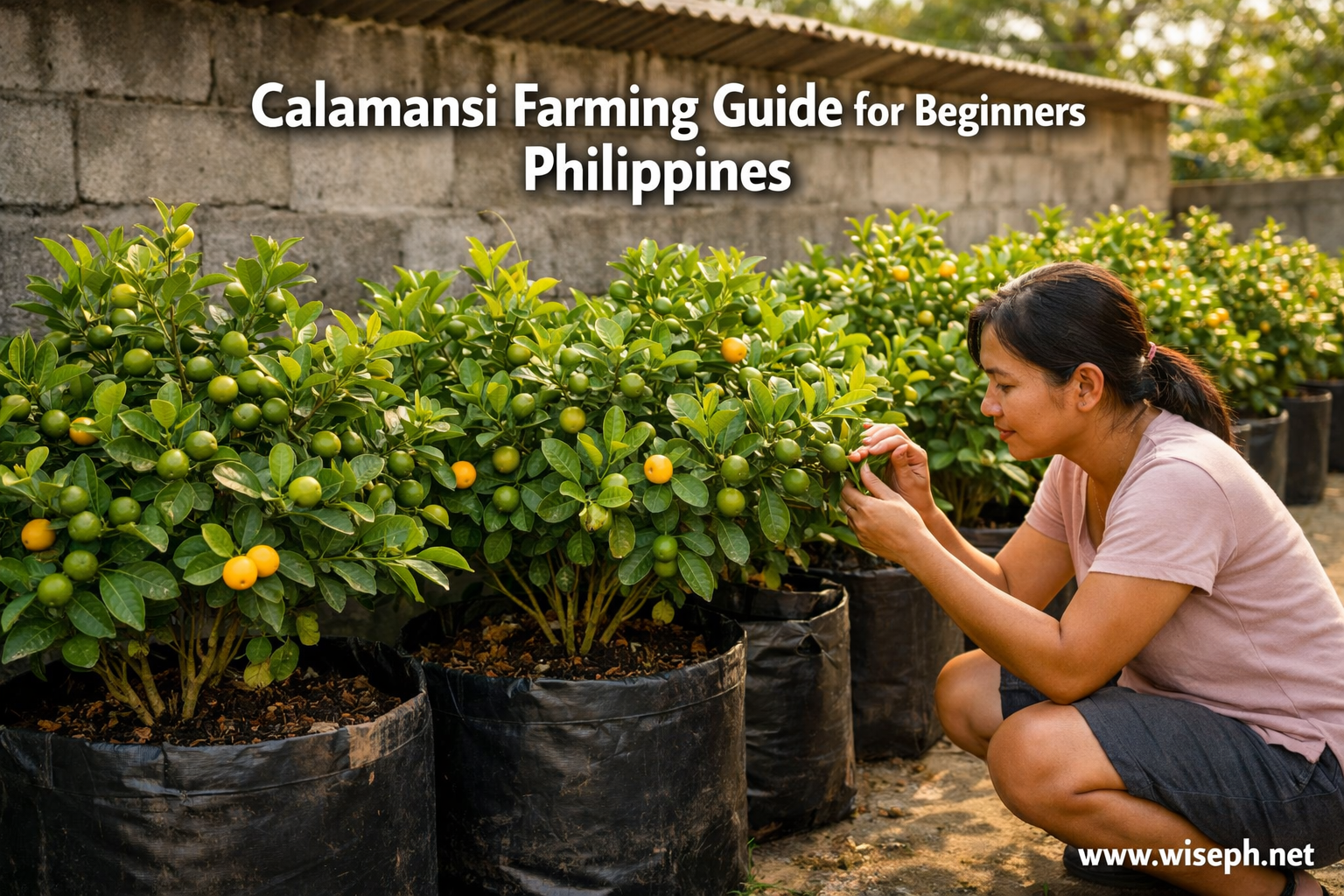
I’ve been growing calamansi in my Cavite backyard for over five years. I started with a few pots for home use and eventually expanded because the demand never stops. We use calamansi for juice, sawsawan, and cooking almost daily, and so does every Filipino household within walking distance.
In my current setup I have 25 to 30 trees at different stages: 15 to 20 in large black plastic pots and 10 to 12 planted directly in the ground. My first batch in 2020 cost around ₱8,000 to ₱10,000. I lost four trees in the first rainy season because of one mistake I’ll cover in detail below.
If you want a low-maintenance, long-producing agri-business you can run from your backyard, calamansi is hard to beat.
Why calamansi works for Filipino backyard farmers
Calamansi (Citrus microcarpa) is one of the most practical fruit trees for Philippine conditions. It fruits almost year-round, with a main peak from August to October according to the DA Bureau of Agricultural Research guidelines. It tolerates container growing, tolerates heat, and has consistent buyer demand year-round.
You don’t need big land. A 50 to 150 sqm concrete yard or patio is enough for 15 to 20 pots. Specifically, a grafted tree starts fruiting 1 to 2 years after planting. Compare that to 5 to 6 years for seed-grown trees and the math is simple: always buy grafted.
Retail prices in CALABARZON averaged ₱121 per kilo in March 2025, reaching ₱135 to ₱250 per kilo in Metro Manila during lean months, based on DA price monitoring data. Selling direct to neighbors and carinderias gets you the retail end of that range, not the trader farmgate.
How much does it cost to start a calamansi farm in pots?
For a practical 15 to 20 pot starter setup, the all-in first-cycle budget is ₱12,000 to ₱18,000. After year 1, ongoing costs drop to ₱3,000 to ₱6,000 per year (fertilizer, sprays, and occasional repotting mix).
| Expense | Cost range | Notes |
|---|---|---|
| Pots or grow bags (15 to 20 pcs, 20 to 30 liter) | ₱3,000 to ₱5,000 | ₱150 to ₱250 each; add ₱300 to ₱500 for drainage gravel |
| Grafted calamansi seedlings (15 to 20 pcs) | ₱4,000 to ₱6,000 | ₱200 to ₱350 each from Batangas or Cavite nurseries |
| Potting mix and soil amendments | ₱2,000 to ₱3,000 | Garden soil, rice hull, coco coir, perlite, compost |
| Fertilizers (Year 1 supply) | ₱1,000 to ₱1,800 | 14-14-14 complete, vermicast, foliar spray, potash booster |
| Pest control and basic tools | ₱800 to ₱1,500 | Neem oil, copper fungicide, pruning shears, watering can |
| Miscellaneous | ₱500 to ₱1,000 | Mulch, pH strips, stakes, seedling transport |
| Total (first year) | ₱12,000 to ₱18,000 | Pots last for years; major cost drops from year 2 |
In particular, the potting mix is where most beginners cut corners and regret it. That ₱2,000 to ₱3,000 on rice hull, perlite, and compost is not optional. It’s what keeps your roots alive through typhoon season.
What setup do you actually need as a beginner?
You don’t need a big lot. A concrete patio, rooftop, or 50 sqm yard is enough for 15 to 20 large pots. Black plastic grow bags (20 to 30 liters, 10 to 14 inches wide) are the most practical and cheapest option.
Before your seedlings arrive, prepare:
- Pots with multiple large drainage holes; add a layer of gravel or broken pots at the bottom
- Potting mix: 30 to 40% drainage material (rice hull, perlite, or coarse sand) mixed into garden soil and compost
- A shaded area for the first 4 to 8 weeks while seedlings adjust
- Full-sun placement after establishment (6 to 8 hours daily (non-negotiable for good fruiting))
- Basic supplies: pruning shears, watering can or hose, pH strips, neem oil
Elevate pots slightly off the ground using bricks or pot feet so water drains freely. In my setup, pots that touch flat concrete during heavy rain hold moisture underneath and invite root problems. A small detail that makes a big difference.
Where to buy grafted calamansi seedlings in the Philippines
Always buy grafted, not seed-grown. Grafted trees fruit in 1 to 2 years. Seed-grown trees take 5 to 6 years. The ₱50 to ₱100 price difference per seedling pays for itself many times over.
| Region | Key sources | Notes |
|---|---|---|
| Batangas (best for Luzon) | Ivarie Plant Nursery, Talisay area (0975-012-5277); Santo Tomas nurseries | Widest variety; consistent quality; bulk delivery available |
| Cavite | Silang-area nurseries; Homeplus Gardening (0915-273-9331) | Convenient for CALABARZON buyers; pickup or Lalamove delivery |
| Laguna / Quezon | Los Banos and Sariaya area nurseries | Good secondary option for Southern Luzon |
| Online | Lazada, Shopee, Facebook Marketplace | Search “grafted calamansi Batangas”; COD available; check seller reviews |
| DA / local government | Provincial Agriculture Office, DA regional stations | Sometimes offer subsidized seedlings for groups or beginners |
Current price range (May 2026): ₱200 to ₱350 per grafted seedling. Bulk orders of 10 or more usually get a discount.
What to look for: clear graft union 4 to 8 inches above the soil line, vibrant green leaves with no distortion, active new growth, no pests on the undersides. Quarantine new seedlings for 1 to 2 weeks before potting.
Red flags: very cheap seedlings under ₱150 (likely seed-grown), leggy or pale stems, white spots or sticky residue, no visible graft scar, seller who won’t let you inspect. I bought cheap unverified seedlings once and lost them in the first rainy season. Trusted Batangas nurseries only after that.
How to care for calamansi trees in Philippine conditions
Calamansi needs consistent but not excessive care. The schedule below is what I follow after five years of cycles through Cavite’s wet and dry seasons.
| Task | Frequency | Key details |
|---|---|---|
| Watering (young trees, first 6 to 12 months) | Every 1 to 2 days dry season; every 3 to 5 days wet season | Water when top 2 to 3 inches of soil feels dry; never daily in rain |
| Watering (mature trees, year 2+) | Every 2 to 4 days dry season; check weekly in wet season | Lift the pot; lighter weight means it needs water |
| Fertilizing (months 1 to 3) | Compost tea or vermicast only | No strong chemical until roots are established |
| Fertilizing (months 4 to 12) | Every 4 to 6 weeks | 50 to 100g 14-14-14 per tree, scattered at base and watered in |
| Fertilizing (year 2+ fruiting stage) | Every 3 to 4 months | Switch to high-potassium formula (0-0-60 or fruiting blend); 200 to 400g per tree |
| Foliar spray | Every 2 to 4 weeks | Seaweed extract or calcium-magnesium mix; prevents leaf deficiencies |
| Pruning | After every major harvest (every 2 to 3 months) | Never remove more than 20 to 30% at once; open the center for airflow |
The biggest overall beginner trap is inconsistent care. They start strong then stop pruning and fertilizing during busy months or the rainy season, and the trees stop fruiting or get leafminers. My daily routine takes 10 to 15 minutes: quick walk-through, water as needed, remove fallen leaves. That consistency over months is what makes trees productive.
The one rule that protects your first trees
Fix drainage before you plant anything. This is the single rule that separates people who harvest year-round from those who keep buying replacement seedlings every rainy season.
Calamansi hates wet feet. In poorly drained pots or clay soil, water pools at the roots. The tree may look healthy for months, lush and even flowering. Then one heavy typhoon week of no drainage and the roots turn black and mushy (Phytophthora root rot). By the time you see yellowing leaves and wilting, it’s often too late.
I lost four out of my first ten potted trees this way in 2021. I used regular garden soil with no drainage amendments. The trees survived the dry months and collapsed when the wet season hit. That mistake cost me replacement seedlings, time, and one potential early harvest.
My fix now, applied to every single pot and ground planting:
- Potting mix with 30 to 40% rice hull, perlite, or coarse sand mixed in
- Gravel or broken pot pieces at the bottom of every container
- Pots elevated off flat surfaces on bricks or stands
- Ground planting on slight mounds with clay soil heavily amended with compost and sand
- Drainage test before any ground planting: fill the hole with water; it should drain within 30 to 60 minutes
Common pests and diseases and how to stop them
Prevention through good drainage, pruning, and consistent observation handles 90% of problems. Here’s what to watch for and how to respond.
| Problem | What you see | First response |
|---|---|---|
| Citrus leafminer (Phyllocnistis citrella) | Silvery zigzag trails on new leaves; curled, distorted young growth | Neem oil spray every 7 to 10 days during new flush; remove and dispose of heavily infested tips |
| Root rot (Phytophthora) | Yellowing leaves, wilting, gum oozing at trunk base, black mushy roots | Stop watering; improve drainage immediately; drench with copper fungicide or Trichoderma bio-agent; repot in fresh sterile mix if severe |
| Aphids, scale, mealybugs | Clusters on new shoots, sticky honeydew, black sooty mold, ants on branches | Strong water spray + diluted dish soap or neem oil every 5 to 7 days; prune and discard heavily infested stems |
| Citrus canker (bacterial) | Raised corky lesions with oily halo on leaves and fruits; fruit drop | Remove and burn infected parts; copper hydroxide spray every 2 weeks during rainy season; disinfect pruning tools with bleach after each cut |
| Nutrient deficiency (iron or magnesium) | Yellow leaves with green veins remaining | Foliar spray with calcium-magnesium or chelated iron; adjust soil pH toward 6.0 to 7.0 |
Leafminers are the most persistent pest in Philippine backyards. Specifically, they explode during new leaf flushes in rainy season. In my setup, keeping a neem oil rotation every two weeks during those periods keeps damage under 10 to 15%. Skip it for a month and entire new flushes distort and weaken the tree for the next fruiting cycle.
How much can you realistically earn from 15 to 20 calamansi pots?
Honest numbers. No inflated yields, no commercial farm math applied to containers.
| Stage | Harvest volume | Selling price (direct) | Gross revenue | Net profit |
|---|---|---|---|---|
| Year 1 (establishment) | 0 to 5 kg (light tasting) | n/a | n/a | Investment phase |
| Year 2 (first real harvest) | 20 to 60 kg total | ₱120 to ₱160/kg direct | ₱2,400 to ₱9,600 | ₱0 to ₱3,000 after costs |
| Year 3+ (steady state) | 60 to 120 kg/year | ₱130 to ₱200/kg direct | ₱7,800 to ₱24,000 | ₱5,000 to ₱14,000 net |
My Year 2 total was only about 35 kg and felt slow. I almost lost motivation. By Year 3, however, the trees hit their stride and the harvests started compounding. That patience gap between planting and profitable production is where most beginners quit.
Selling direct to households and carinderias gives you ₱120 to ₱180/kg versus ₱50 to ₱80/kg to traders. That price difference is the entire margin on a small pot setup. Build your buyer list before the first harvest, not after.
Off-season months (January to May) command the best prices, sometimes ₱180 to ₱220/kg. Pruning and fertilizing at the right time to push production during those lean months is where consistent growers earn the most.
Once your trees produce steadily, put the extra income to work. A Pag-IBIG MP2 account compounds your harvest income tax-free; use the MP2 savings calculator to see how even ₱500 a month grows over five years. And if your calamansi income becomes consistent, check the 2026 BIR 1701A guide before your first full income year ends.
How to sell your calamansi
My channel ranking by actual profit margin:
- Direct to households and neighbors (60 to 70% of my sales): Post harvest photos on Facebook Marketplace and barangay chat groups with a simple post: “Fresh from backyard, picked this morning.” Many repeat buyers text me every 1 to 2 weeks. Delivery by motorcycle for 5 to 10 kg orders.
- Carinderias, sari-sari stores, small restaurants (20 to 25%): Steady weekly buyers. I deliver 10 to 20 kg to 4 to 5 regulars. They value consistent supply and clean, sorted fruit.
- Wet market traders (10 to 15%): Easiest for bulk peaks, but lowest price (₱50 to ₱80/kg). Use only when volume exceeds direct-sale capacity.
- Bonus: potted fruiting trees: When repotting or propagating extras, I sell potted trees for ₱500 to ₱1,500 each. Often more profitable per kilo-equivalent than selling fruit.
First-harvest tip: offer small 1 to 2 kg trial packs at full price to new buyers. Add a small handful extra on the first order. After two or three purchases, most become automatic regulars. Building five to ten reliable repeat buyers before your next peak harvest transforms your income from uncertain to predictable.
Calamansi pairs naturally with other backyard setups. If you’re also running a fish setup, diluted hito pond water makes an effective organic fertilizer for the trees. I use it on my ground-planted trees regularly. For more backyard income ideas, both hito farming in drums and crayfish farming use the same small footprint. Longer-term, agarwood farming is worth looking at as a slower-yield intercrop on the same land.
What most calamansi guides get wrong
Most online guides, DA booklets, and YouTube videos make the same five omissions:
- Drainage gets one sentence. In practice, poor drainage in pots or clay-heavy Philippine soil is the primary killer of calamansi trees. One typhoon week with waterlogged roots and Phytophthora does what no pest ever could.
- Pot culture yields are different from farm yields. Guides cite ground-planted commercial farm numbers. In a 20 to 30L pot, expect 4 to 6 kg per tree per year, not 20 to 50 kg. Plan accordingly.
- The first year is slow, and guides skip that part. Most show thriving trees with big harvests. Year 1 is establishment. The second year is light. By Year 3 the real returns begin, and beginners who quit just before that point miss everything they worked toward.
- Leafminer pressure is constant. Philippine humidity means leafminers attack every new flush. Missing two weeks of neem oil during a flush weakens the tree for the entire next fruiting cycle. Guides list it as one pest among many; it’s actually the most persistent weekly concern.
- Selling to one trader is not a strategy. Most beginner guides end at “sell at ₱100/kg.” In reality, selling everything to a single trader at farmgate price means earning less than half of what direct sales generate. Building a buyer list is part of the farming work.
Watch the latest oil price and transport cost updates; fuel affects both your input delivery costs and what buyers in your area will actually pay for direct delivery.
Frequently asked questions
How long does it take for a grafted calamansi tree to bear fruit in the Philippines?
A grafted calamansi tree starts bearing fruit 1 to 2 years after planting, compared to 5 to 6 years for seed-grown trees. Always buy grafted seedlings from reputable Batangas or Cavite nurseries. Proper drainage, full sun (6 to 8 hours daily), and consistent fertilizing during the first year speed up the timeline.
How many kilos of calamansi does one potted tree produce per year?
In a 20 to 30 liter container, a healthy mature tree produces 4 to 6 kg per year on average, with well-cared-for trees reaching up to 8 to 10 kg. Ground-planted trees produce significantly more. Container trees peak from Year 3 onward with proper pruning and fertilizing.
Why are my calamansi leaves curling or have silvery zigzag trails?
Those are the signature signs of citrus leafminer (Phyllocnistis citrella). Spray neem oil on both sides of new leaves every 7 to 10 days during new flush periods. Remove and dispose of badly affected leaf tips. The pest is most active during wet-to-dry season transitions in the Philippines.
How much can I earn from 15 to 20 calamansi pots in the Philippines?
Expect light returns in Year 2 (₱0 to ₱3,000 net) and ₱5,000 to ₱14,000 net per year from Year 3 onward when sold direct to households and carinderias at ₱130 to ₱200 per kilo. Ongoing annual costs from Year 2 are only ₱3,000 to ₱6,000 for fertilizer and pest control.
Do I need a permit to sell calamansi from my backyard in the Philippines?
Small-scale backyard farming for local sale generally does not require a special agricultural permit. Once income becomes consistent, register with your LGU and the BIR. Check your municipal agriculture office for local requirements.
Ready to build your backyard agri-business? Browse more agri-business ideas in the Philippines that fit small land, limited capital, and a part-time schedule.