



Most people touring Ilocos Sur stick to Vigan’s heritage streets and call it a day. Pinsal Fall, just a tricycle ride from Sta. Maria town proper, is the detour most of them miss. It is quiet, it is free to enter, and the scenery hits harder in person than in any photo.
This 2026 travel guide covers everything you need to plan a visit: how to get there, what to expect when you arrive, the best time to go, and how to build a full day around it.
What Pinsal Fall actually looks like
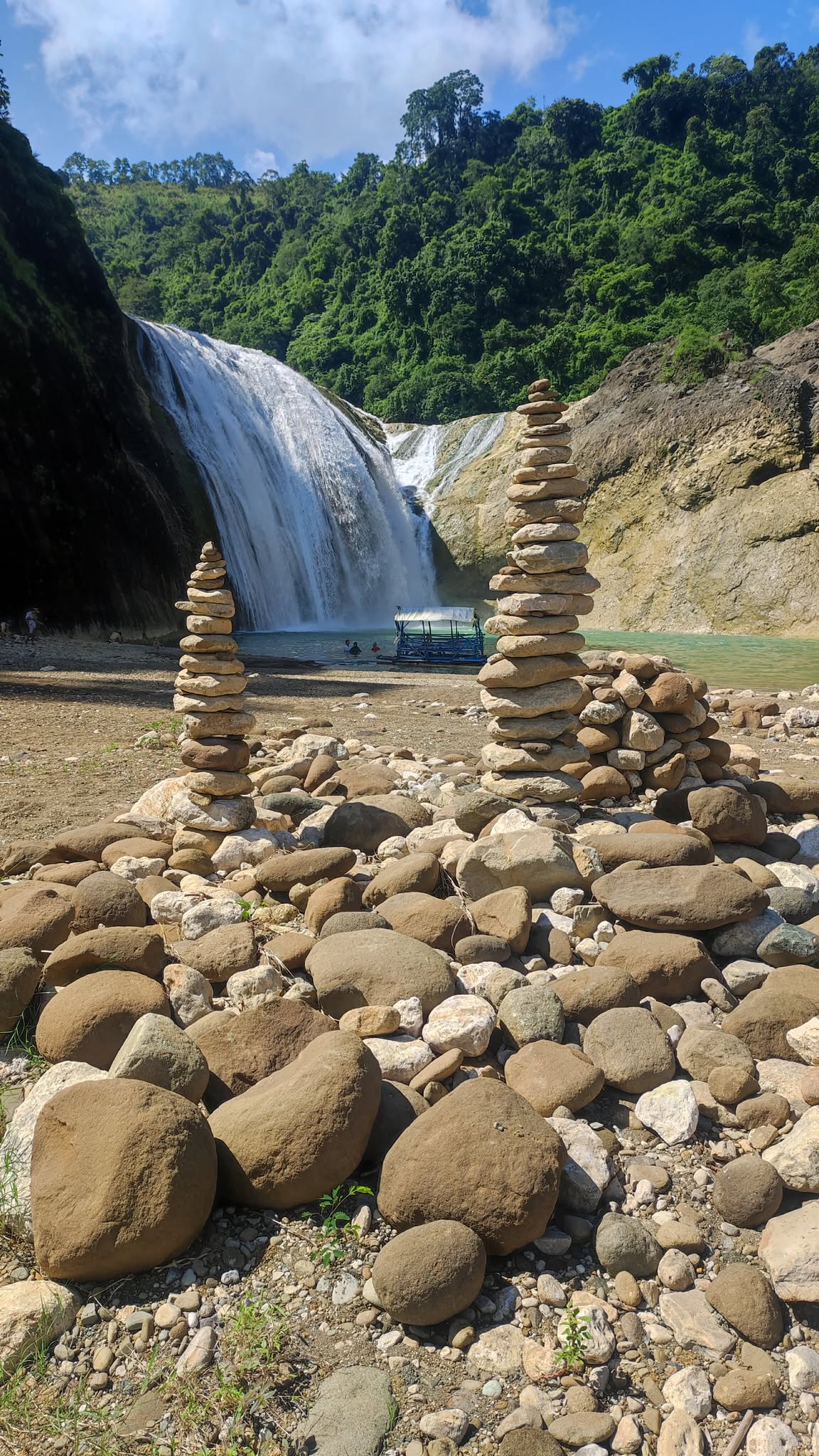
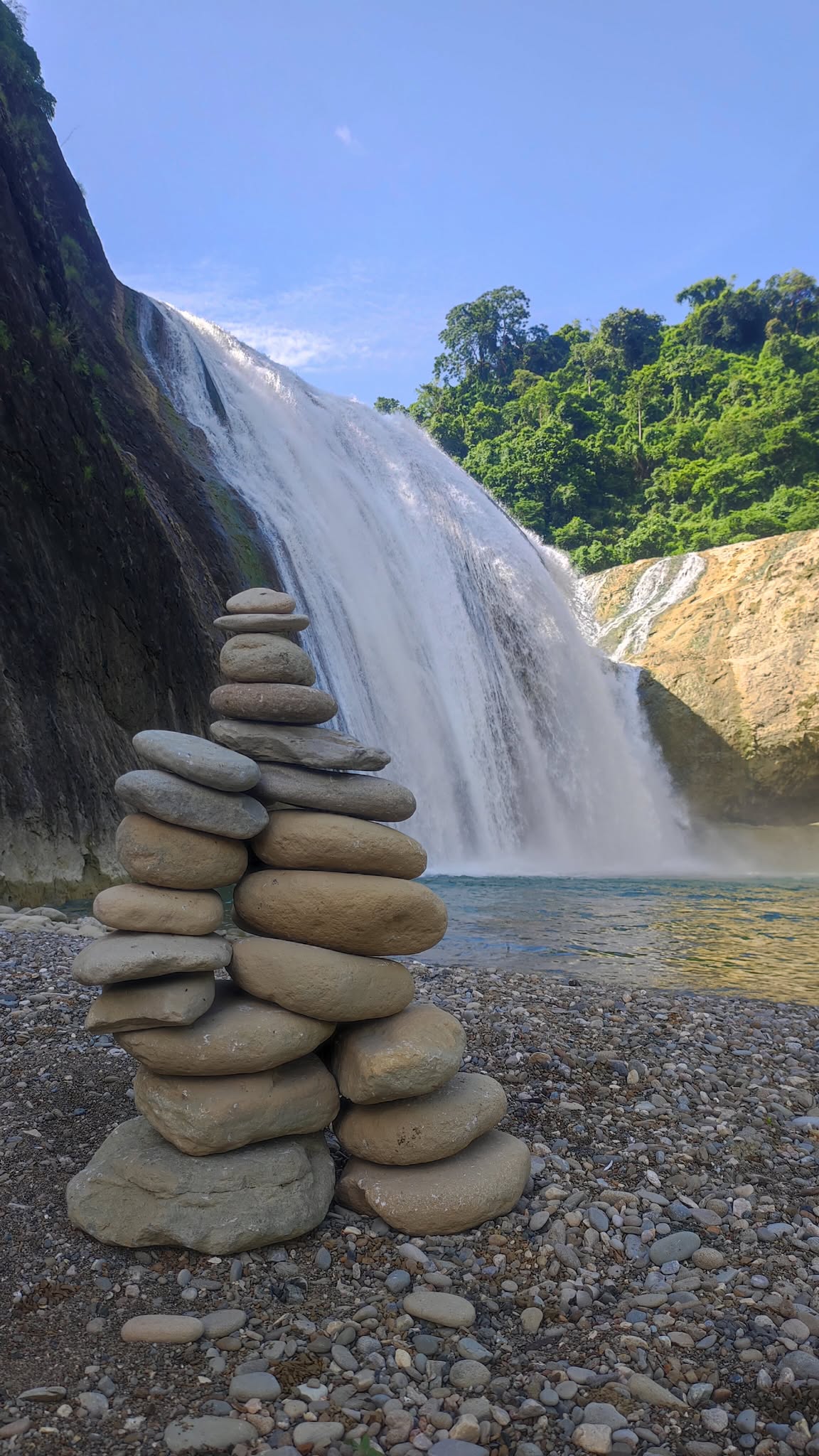
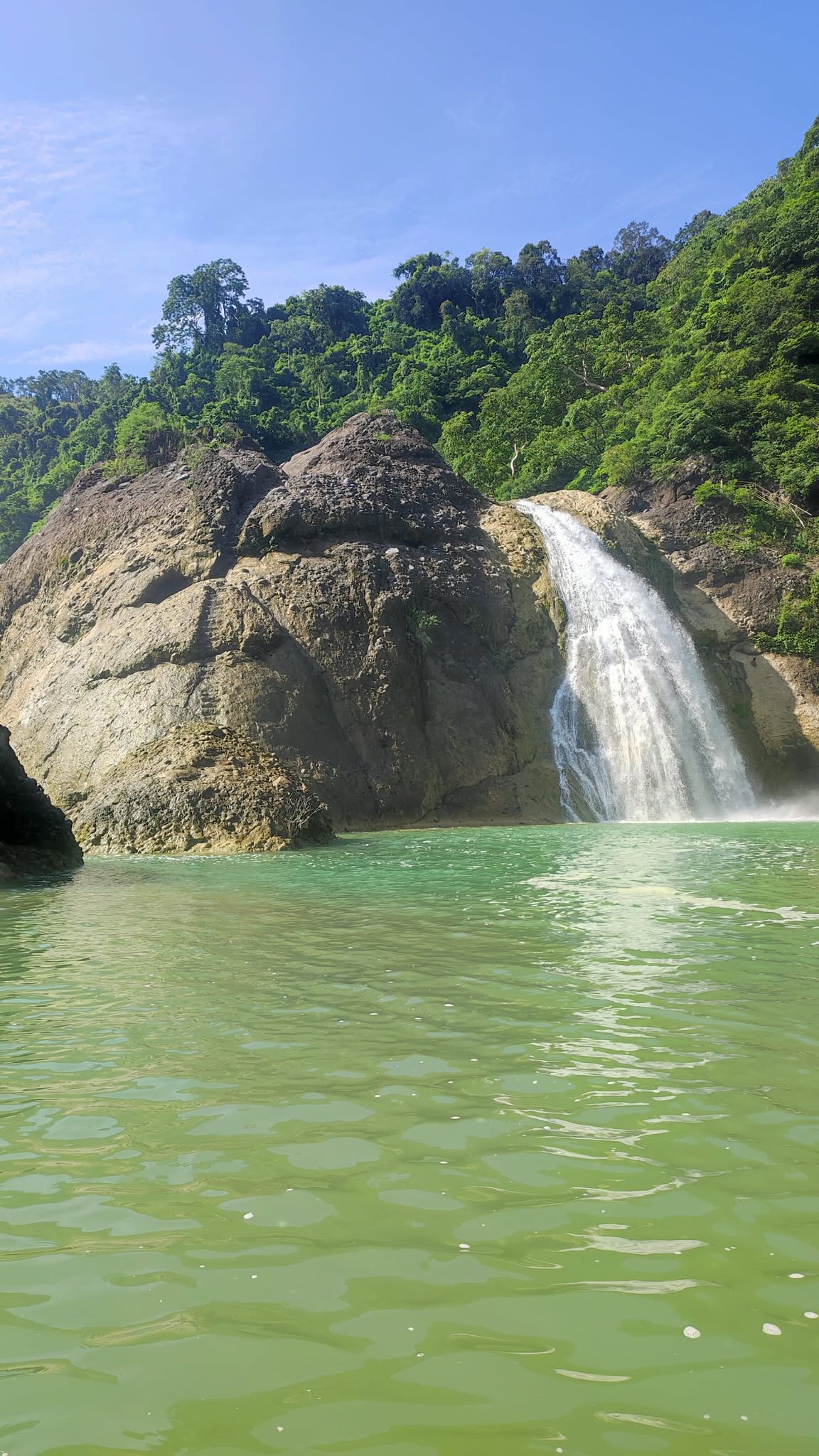
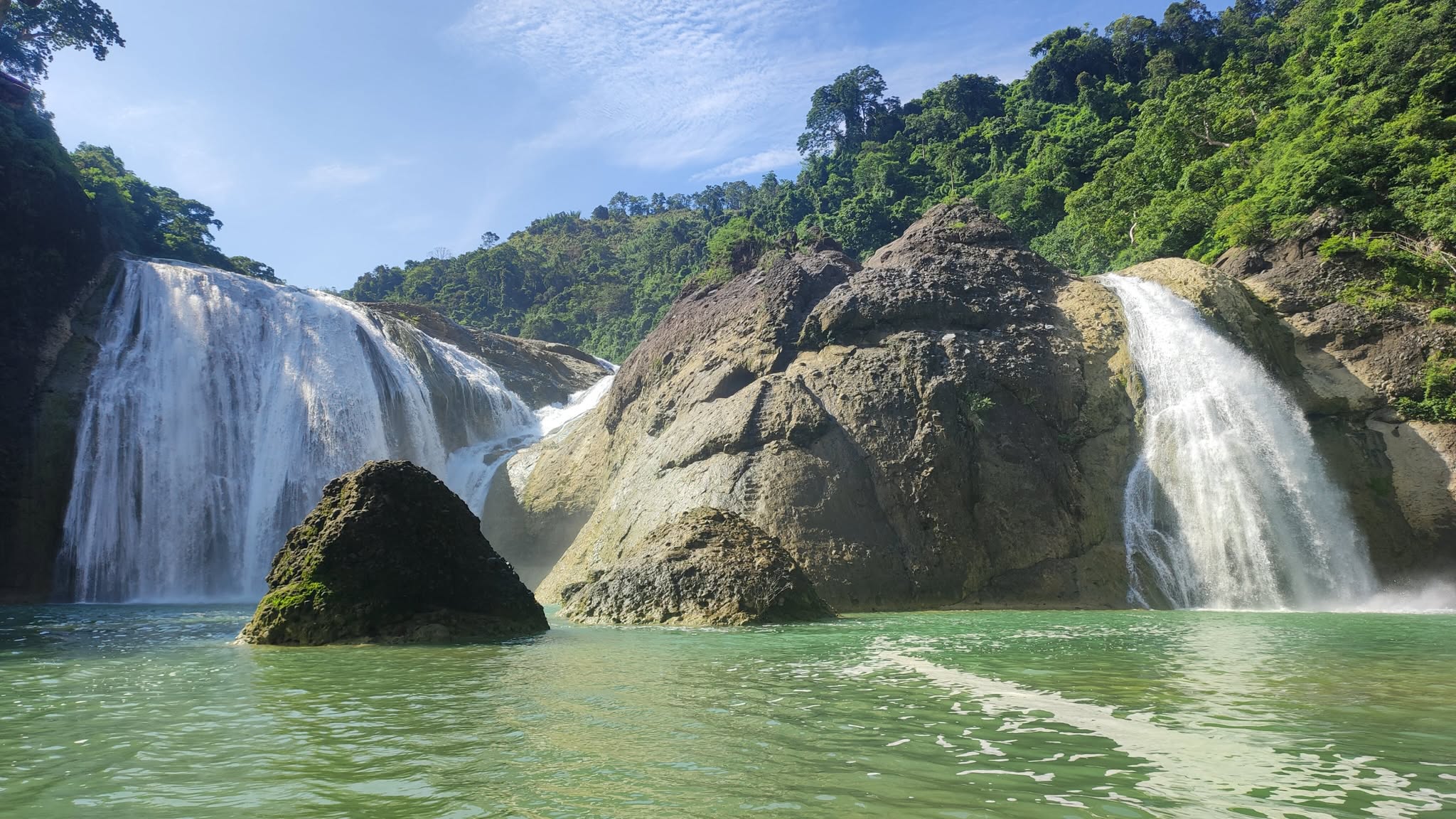
Pinsal Fall stands roughly 85 feet high, split into two tiers. The upper section feeds into a smaller cascade and a set of natural pools. The lower drop is the main one, wide and forceful during the wet season, falling into a turquoise-green river below.
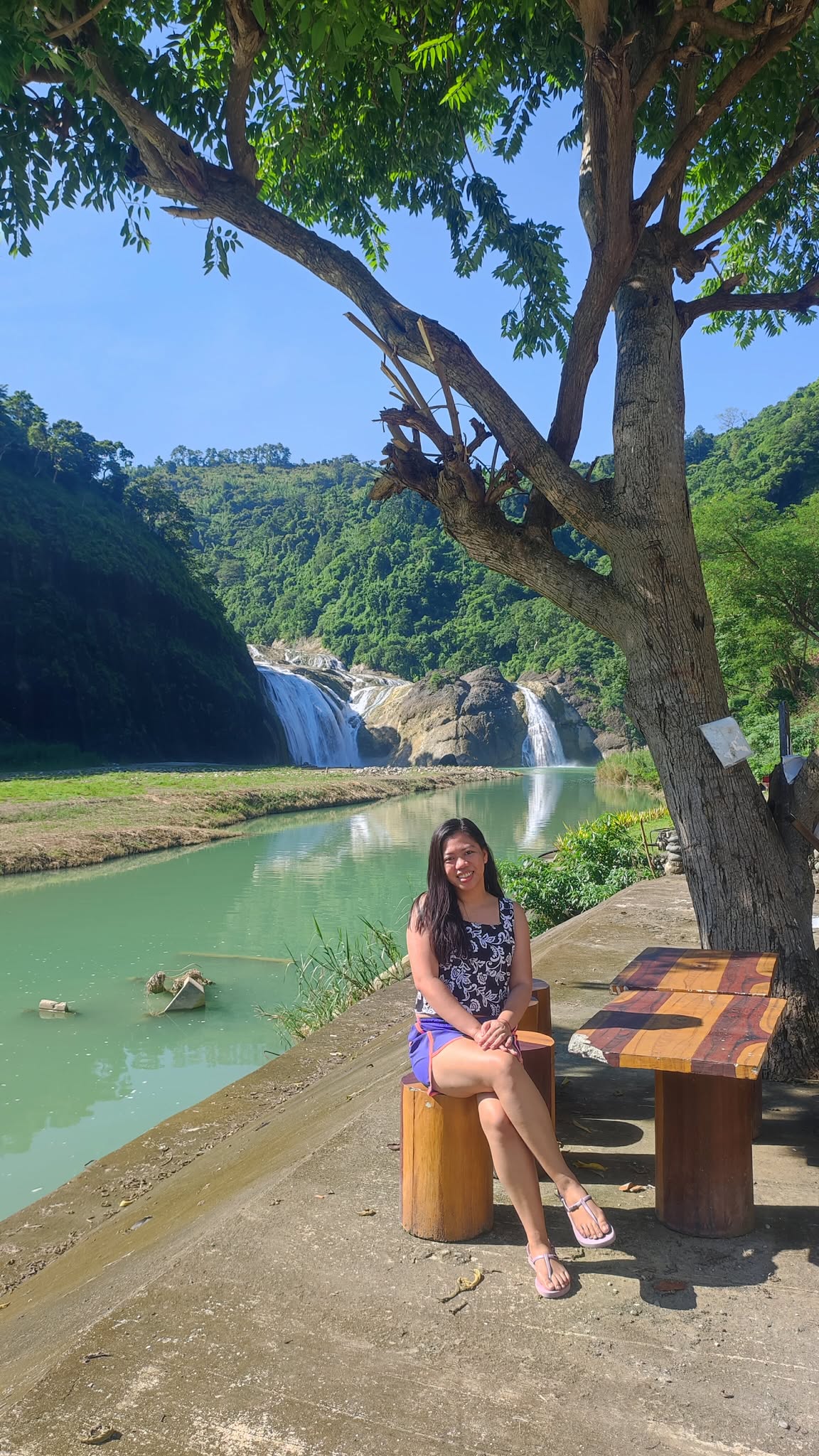
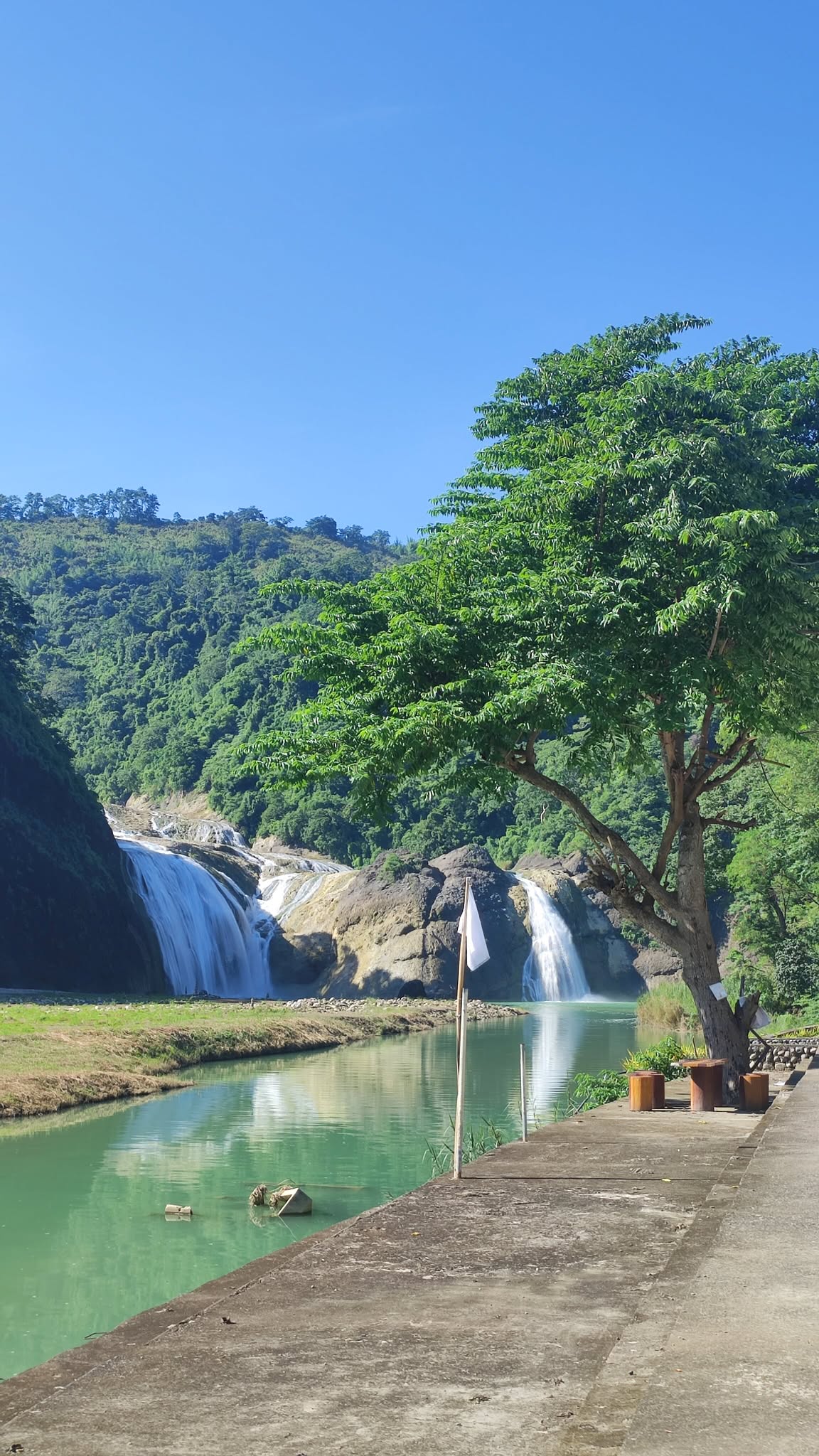
Two view decks sit on the opposite bank, giving you a clear look at the entire waterfall from a distance. The upper deck is the better of the two. From there, you can see both the main drop and the smaller cascades above it at the same time. Down at the base, the natural pool is swim-friendly when conditions allow, and the water runs cool even during warmer months.
The two tiers and the pools
What separates Pinsal Fall from a typical single-drop waterfall is the layered setup. The upper tier has smaller pools and flowing channels before the water reaches the main drop. Below the falls, the wide emerald pool is the main swimming and photo area. Both levels are accessible, though reaching the upper pools requires some climbing along narrow steps near the bank.
How to get to Pinsal Fall
The most practical route for most travelers is bus to Sta. Maria, then tricycle to the falls. Pinsal Fall is not right on the highway, so that last leg by tricycle is the part you need to plan for.
From Manila
Take any northbound bus to Ilocos Sur from terminals in Cubao, Pasay, or Sampaloc. Major bus lines serve routes to Vigan, Laoag, and Bangued. Ask the conductor to drop you at Sta. Maria, typically near Savemore or the town center. Travel time from Manila is roughly 8 to 10 hours depending on traffic and stops. From the drop-off point, hire a tricycle to Pinsal Fall.
From Vigan
From Vigan, ride a southbound bus toward Sta. Maria. The trip takes about 55 minutes. Once in Sta. Maria town proper, take a tricycle to the falls. This is the shorter and easier option if you are already in the area. If you are driving, Pinsal Fall is navigable via Google Maps under the name Pinsal Falls.
Entrance fee and what you pay on arrival
There is currently no entrance fee to access Pinsal Fall. However, there are a few optional costs worth knowing before you arrive.
| Item | Cost | Notes |
|---|---|---|
| Entrance fee | Free | No environmental fee as of 2026 |
| Bamboo raft ride | ~₱20/person | Gets you closer to the main drop |
| Cottage rental | ₱100 to ₱300 | Rustic, good for picnic groups |
| Tricycle from Sta. Maria | ~₱50 to ₱150 | Depends on negotiation and group size |
| Parking | Varies | Ask locally if driving your own car |
Bring small bills and coins. There are no ATMs near the falls, and most transactions on-site are cash only.
What to do at Pinsal Fall
Pinsal Fall is a scenic stop, not a full activity park. The experience is slower and more relaxed than you might expect, which is actually part of its appeal.
Main activities at the site
The two view decks are the highlight. Start at the lower deck for your first look, then climb to the upper deck for the full picture of both tiers. That upper vantage point is significantly better, so do not skip it even if the climb feels steep.
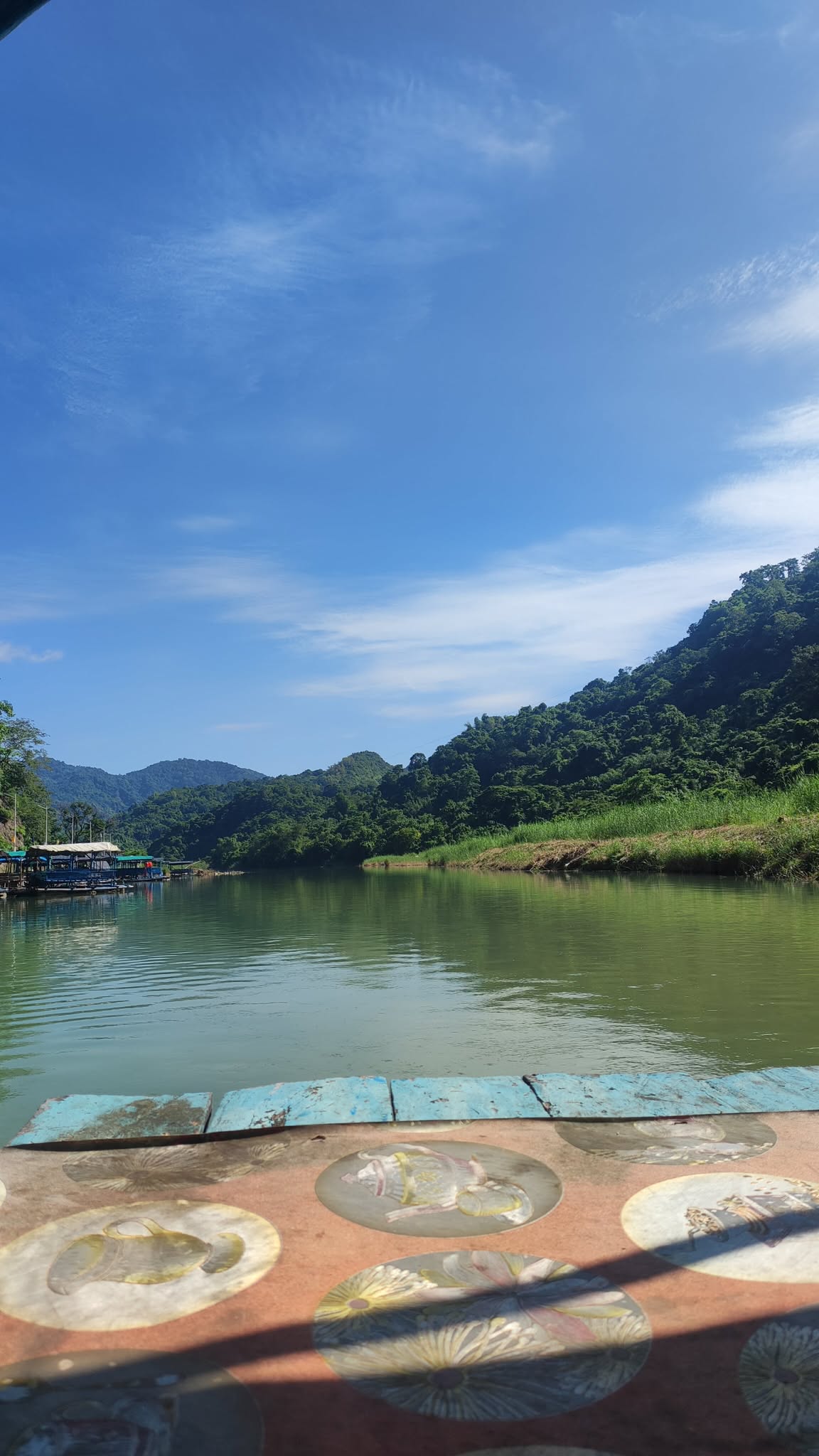
For ₱20 per person, the bamboo raft ride is short but worthwhile. It brings you closer to the base of the main drop and gives a different perspective of the falls that you cannot get from the bank. Swimming is possible in the natural pool when water conditions are safe. Activities may vary depending on how the site is being managed on the day you visit, so check with local staff when you arrive.
For groups, renting a cottage and settling in for a picnic is a popular option. Staying an hour or two with food and good company fits naturally in a place this quiet.
Best time to visit Pinsal Fall
Visit during or shortly after the rainy season, between June and November. The water volume is at its highest during this period, and the falls look the way you see in photos. Going outside this window is a gamble: the flow can drop significantly during the dry months, and by the peak of summer (March to May), the falls can reduce to a trickle.
Morning vs. afternoon
Arriving in the morning gives you cooler temperatures and softer light for photos. By midday, the path to the view decks can get warm since parts of it are exposed. If you are combining the falls with Sta. Maria Church and Vigan, starting at Pinsal Fall first thing works well as a morning opener before moving to the heritage stops.
What to bring to Pinsal Fall
The facilities at Pinsal Fall are basic. There are no convenience stores, no restaurants, and no gear rental near the site. Everything you need, you bring yourself.
The essential packing list
- Quick-dry clothes or swimwear worn under your outfit so you do not need to change on-site
- Water shoes or rubber slippers because paths near the river are wet, rocky, and uneven
- Small cash (₱100 to ₱500) for the tricycle, cottage, and raft ride
- Water and light snacks, since food options near the falls are limited
- Dry bag or waterproof pouch for your phone, wallet, and any documents
- Extra shirt and small towel if you plan to swim
- Sunscreen and a hat for the exposed sections of the path and view decks
Practice CLAYGO (Clean As You Go). There are no waste collection services at the site, so take your trash out with you when you leave.

Nearby attractions to combine with your visit
Pinsal Fall works best as one stop in a longer Ilocos Sur day, not as a standalone destination. Here are the most natural add-ons.
Sta. Maria Church
The Nuestra Señora de la Asuncion Parish Church in Sta. Maria is a UNESCO World Heritage Site and one of the Baroque churches of the Philippines. It sits on a hill and is only a short tricycle ride from the falls. Most travelers hit this right after Pinsal Fall before heading north to Vigan.
Vigan City
After Sta. Maria, head north to Vigan for the rest of your day. Walk Calle Crisologo for the heritage street experience, then stop by Bantay Bell Tower for a quick overlook of the town. While in Vigan, try the local food. Vigan longganisa is the must-try, and Ilocano sinanglaw is worth a bowl if you want something more filling after a morning of walking.
Baey Anito Falls in Alilem
If you are specifically chasing waterfalls in the region, Baey Anito Falls in Alilem, Ilocos Sur is another option worth adding to your list. It takes more effort to reach than Pinsal Fall, but the scenery is different and the trail adds a hiking element to the experience.
Practical tips before you go
A few things most travel guides leave out about visiting Pinsal Fall in 2026.
- Set realistic expectations. As of recent reopening updates, activities at Pinsal Fall may be limited to view deck sightseeing, the bamboo raft ride, and cottage picnics. Do not assume swimming or upper-tier access is always available. Confirm on arrival.
- The upper steps are narrow and can be rusty. If you plan to climb to the upper pools, wear proper footwear and take it slow. Flip flops are not ideal for that section.
- Plan roughly half a day for the falls plus travel. From Vigan, you can do Pinsal Fall and still have most of your afternoon free. From Manila, expect a full day of travel with a few hours at the site.
- If you love chasing falls in the Philippines, check out the Sagada travel guide for a completely different waterfall and mountain experience up north.
For more destination ideas across the Philippines, browse our travel and tourism guides on WisePH.
Frequently asked questions about Pinsal Fall
Is there an entrance fee at Pinsal Fall in Sta. Maria Ilocos Sur?
As of 2026, there is no entrance fee to access Pinsal Fall. Optional costs include the bamboo raft ride (around ₱20 per person), cottage rental (₱100 to ₱300), and tricycle fare from Sta. Maria town proper.
What is the best time to visit Pinsal Fall?
Visit between June and November, during or shortly after the rainy season. Water volume is highest during this period. Going during the dry season, especially March to May, risks seeing very low flow or a near-dry falls.
How do you get to Pinsal Fall from Vigan?
Take a southbound bus from Vigan to Sta. Maria, Ilocos Sur (about 55 minutes). From Sta. Maria town proper, hire a tricycle to the falls. If you are driving your own car, Pinsal Falls is navigable via Google Maps.
Can you swim at Pinsal Fall?
Swimming is possible in the natural pool at the base, but it depends on water conditions and current site management. Recent updates indicate activities may be limited to view decks, the raft ride, and picnicking. Confirm with on-site staff when you arrive.
What attractions can you combine with a Pinsal Fall visit?
The most natural combination is Pinsal Fall, then Sta. Maria Church, then Vigan City for Calle Crisologo, Bantay Bell Tower, and local food. This makes for a full-day Ilocos Sur route without feeling rushed.